Introduction
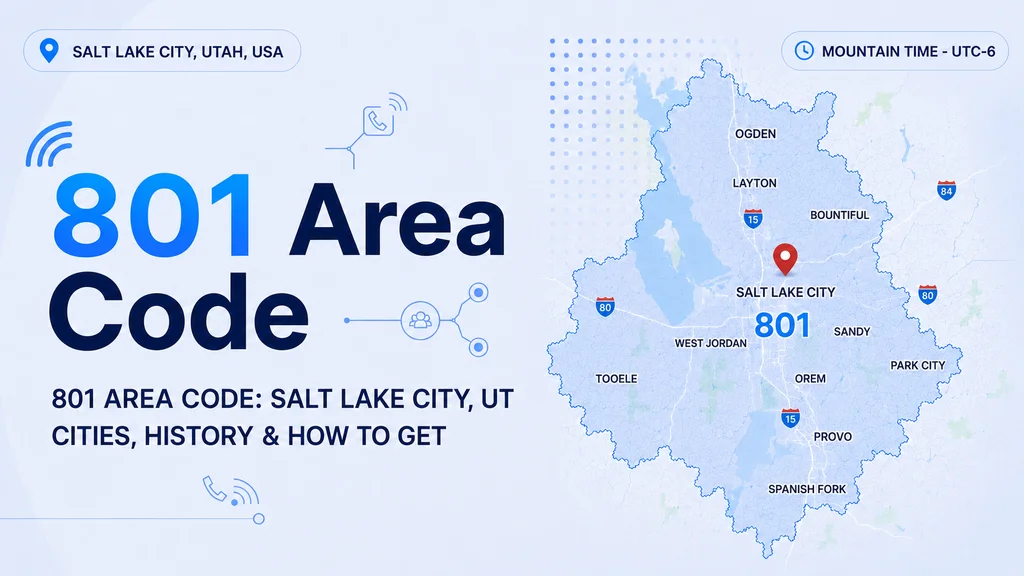
The 801 area code serves Utah's Wasatch Front, the busy corridor that runs from Ogden through Salt Lake City down to Provo. Whether you're identifying an incoming call or building a business presence in the Mountain West, knowing this 801 area code tells you exactly where you stand. This guide covers every key detail: the cities served, Mountain Time zone, history since 1947, dialing rules, and how to get a local number fast. Read on for a complete, up-to-date breakdown of everything the 801 region has to offer.
Key Takeaways:
- The 801 area code covers Utah's Wasatch Front, including Salt Lake City, Provo, and Ogden.
- It was established in 1947 as one of the original North American Numbering Plan area codes.
- The entire 801 region observes Mountain Time — MST (UTC−7) in winter and MDT (UTC−6) in summer.
- The 801 shares its territory with the 385 overlay, so all local calls require 10-digit dialing.
- You can get a local Salt Lake City number in minutes through a VoIP provider — no Utah address required.
What Is the 801 Area Code?
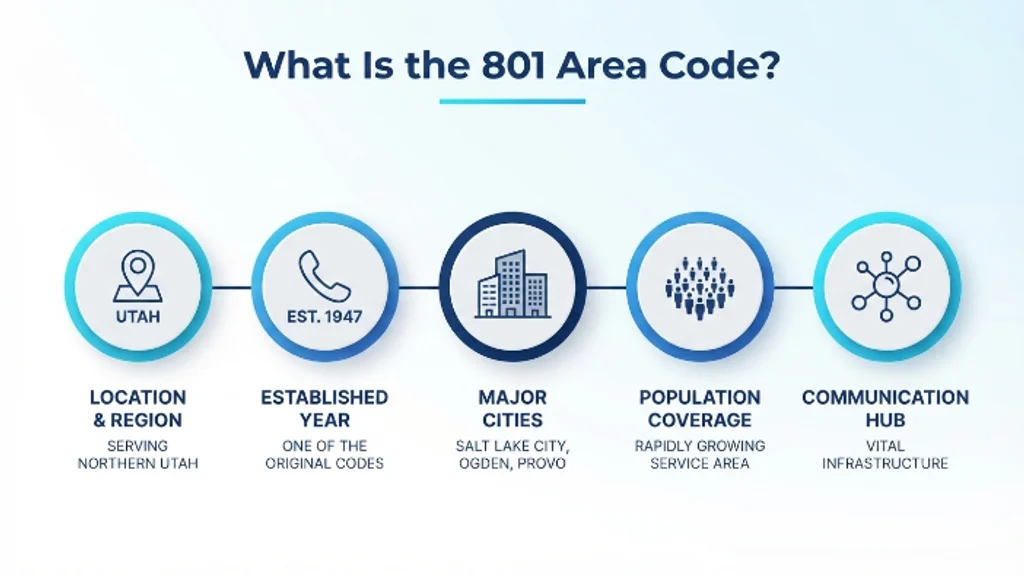
The 801 area code is a North American Numbering Plan (NANP) telephone prefix assigned to north-central Utah. It covers the Wasatch Front — the narrow strip of cities pressed between the Wasatch Mountains and the Great Salt Lake, where most of the state's population lives.
The 801 code is one of the original 1947 area codes, and it once served all of Utah. As the state grew, its footprint shrank to the Wasatch Front, and the 385 overlay was later added to keep a fresh supply of numbers flowing to this fast-growing corridor.
For callers, businesses, and anyone searching for a regional number, the 801 signals an immediate connection to Salt Lake City and Utah's booming Mountain West economy.
Coverage Area and Geography
The 801 area code covers the core of Utah's Wasatch Front. This includes Salt Lake County, Utah County, Davis County, and Weber County — the four counties that hold the bulk of the state's residents.
The region stretches roughly 80 miles along the base of the Wasatch Mountains, from Ogden in the north to Provo in the south. The Great Salt Lake sits to the west, and the mountains rise sharply to the east, funneling growth into this compact urban corridor.
For businesses using virtual numbers to reach the Utah market, a 801 prefix signals immediate local relevance to customers, suppliers, and business partners across the Wasatch Front.
Major Cities in the 801 Region
Several cities define the identity of the 801 area code territory:
- Salt Lake City — the state capital, host of the 2002 Winter Olympics and a major transit hub
- West Valley City — Utah's second-largest city, just southwest of Salt Lake City
- Provo — home to Brigham Young University and a fast-growing tech scene
- Ogden — a historic railroad city at the north end of the corridor
- Sandy — a large suburb south of Salt Lake City near the ski resorts
- Orem — a growing Utah County city next to Provo
- Layton — a Davis County hub near Hill Air Force Base
Together these cities make the Wasatch Front one of the fastest-growing regions in the country, blending outdoor recreation with a thriving technology economy.
Targeting Salt Lake City clients or Wasatch Front businesses?
A local 801 number builds instant trust with regional customers — and you can get one in minutes, no Utah office required.
Time Zone for the 801 Region
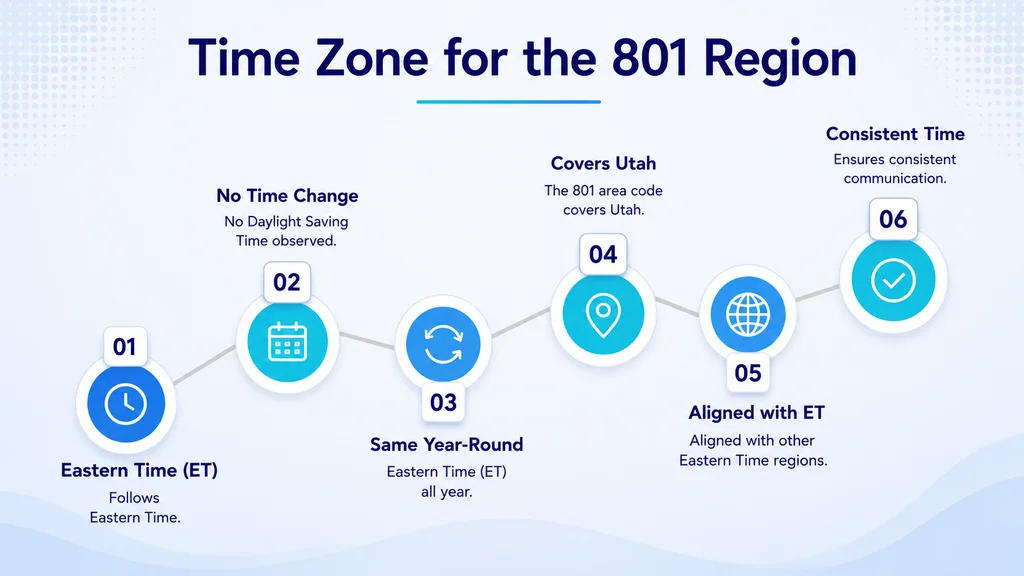
Every community in the 801 area code region observes Mountain Time. From early November through mid-March, the region runs on Mountain Standard Time (MST) at UTC−7. For the rest of the year it shifts to Mountain Daylight Time (MDT) at UTC−6.
For teams scheduling calls with 801 contacts, here are the key time conversions:
- 9:00 AM MST = 11:00 AM EST (US East Coast winter)
- 9:00 AM MST = 8:00 AM PST (US West Coast winter)
- 9:00 AM MST = 4:00 PM GMT (UK standard time)
- 9:00 AM MDT = 11:00 AM EDT (US East Coast summer)
Utah observes Daylight Saving Time in line with federal rules. Clocks spring forward on the second Sunday in March and fall back on the first Sunday in November. Because the whole region shares a single time zone, there is no ambiguity when scheduling calls across the Wasatch Front.
History of the 801 Code
One of Utah's Original Codes
The 801 area code was established in 1947 as part of the original North American Numbering Plan. For decades it served the entire state of Utah, from the Wasatch Front to the rural corners of the state.
In 1997, the 435 code split off to cover the rest of Utah outside the Wasatch Front. That change concentrated the 801 on the state's dense urban core, tying the prefix closely to Salt Lake City and its neighboring cities.
The 385 Overlay
In 2009, the 385 overlay was added on top of the 801 to expand the supply of numbers along the growing Wasatch Front. The overlay covers the same territory, so 10-digit dialing became mandatory. This mirrors the overlay approach used by the 786 area code in Miami, where a second prefix was layered over an existing one.
How to Dial a 801 Phone Number
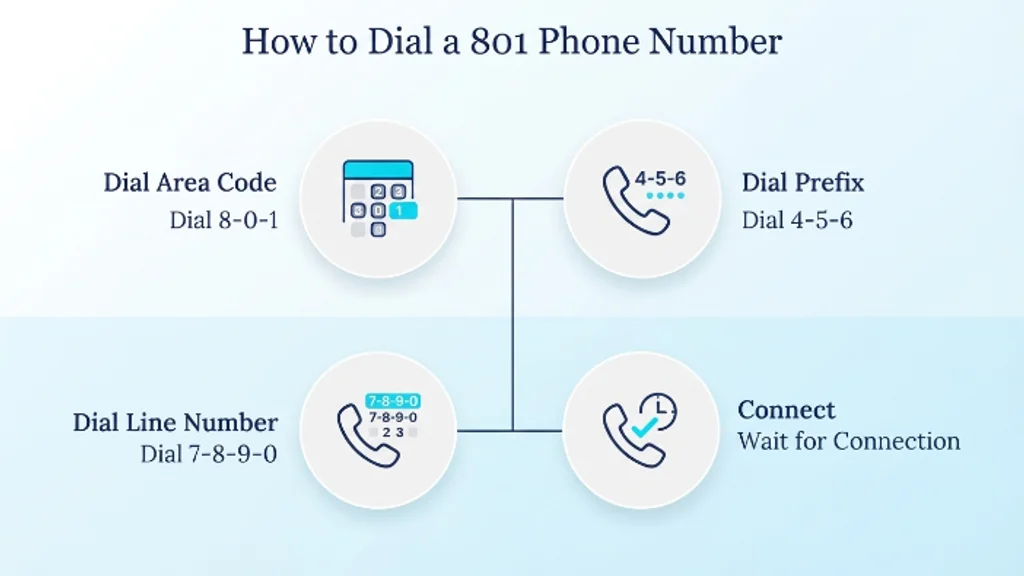
Dialing a 801 phone number follows the standard 10-digit format required across the United States. Because the 385 overlay shares the territory, 10-digit dialing has been mandatory along the Wasatch Front for years. According to FCC guidelines, every domestic call must include the full area code plus the 7-digit local number.
- From within the US: Dial 1 + 801 + 7-digit local number
- From Canada: Dial 1 + 801 + 7-digit number
- From outside North America: Dial your exit code + 1 + 801 + 7-digit number
Most smartphones auto-format calls correctly when a contact is saved with the full number. If you are calling from a landline, always include the 1 prefix for any call originating outside the 801 region.
How to Get a Virtual Phone Number from CallMama
CallMama makes it easy to get a virtual 801 phone number without relocating to Utah or purchasing a new SIM card. Whether you are targeting Salt Lake City businesses or building a presence across the Wasatch Front, the platform delivers a fully functional local number in minutes at competitive rates.
- Visit callmama.com or download the app from the App Store or Google Play
- Create a free account using your email address
- Choose a plan that fits your needs — monthly or pay-as-you-go
- Select United States as the country and enter 801 as your preferred area code
- Complete payment and activate your number instantly
- Set up call forwarding, voicemail, or SMS settings as needed
- Start making and receiving calls from any device right away
Your 801 phone number is fully active the moment payment is confirmed. There are no long-term contracts — upgrade, downgrade, or cancel at any time.
Industries & Economy in the 801 Region
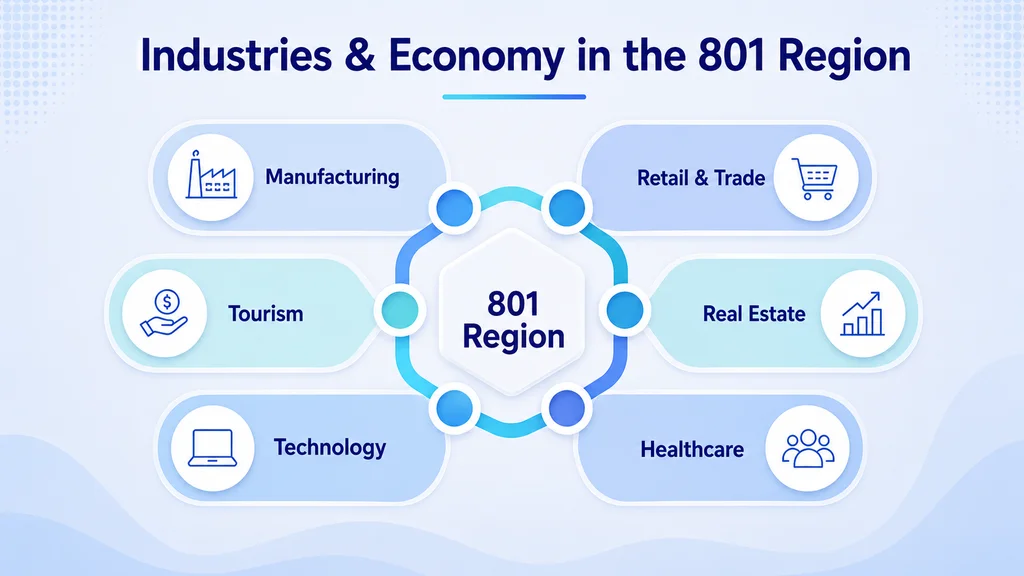
The 801 area code region anchors one of the strongest economies in the Mountain West. Technology leads the way — the corridor between Salt Lake City and Provo, nicknamed "Silicon Slopes," hosts major software and startup companies.
Finance, healthcare, and higher education are major employers, led by the University of Utah and Brigham Young University. Outdoor recreation and tourism draw millions to nearby ski resorts and national parks. Aerospace and advanced manufacturing round out a broad and resilient regional base.
Rapid population growth and a business-friendly climate continue to attract new employers. For businesses serving Utah, a local number with a 801 prefix signals geographic relevance to buyers, partners, and clients across the Wasatch Front.
Why a Local 801 Number Benefits Your Business
A 801 area code number gives your business instant local credibility across the Wasatch Front. Research consistently shows that consumers answer calls from familiar local area codes at higher rates than toll-free or out-of-state numbers — a clear advantage in a competitive regional market.
A 801 phone number removes the barrier of unfamiliarity for prospects in Salt Lake City, Provo, Ogden, and beyond. Whether you work in tech, finance, healthcare, or professional services, local presence accelerates trust and shortens the path to conversion.
Virtual numbers make this accessible to any business — no physical Utah office, no new carrier contract, and no long-term commitment required. You can be up and running with a fully functional Wasatch Front number in minutes.
Conclusion
The 801 area code is the Wasatch Front's defining telephone prefix, serving a region shaped by technology, outdoor recreation, and rapid growth. Covering Salt Lake City, Provo, Ogden, and the cities between them, this 801 code ties Utah's urban core together under one recognizable number. Knowing the region's Mountain time zone, dialing format, and history gives you a practical edge when doing business here. Its long history as an original 1947 prefix makes it one of the most established codes in the West.
Getting a local number with a 801 area code has never been simpler for businesses operating remotely or expanding into the Utah market. A virtual 801 number lets you build local trust without a physical Salt Lake City address or a long-term commitment. Take the next step, explore your options, and connect with Wasatch Front customers on their own terms. Start today and establish your local presence with a single activation.
Ready to connect with Wasatch Front customers?
Get a virtual 801 number today — no office, no SIM, no contract. Instant activation from anywhere in the world.
