Introduction
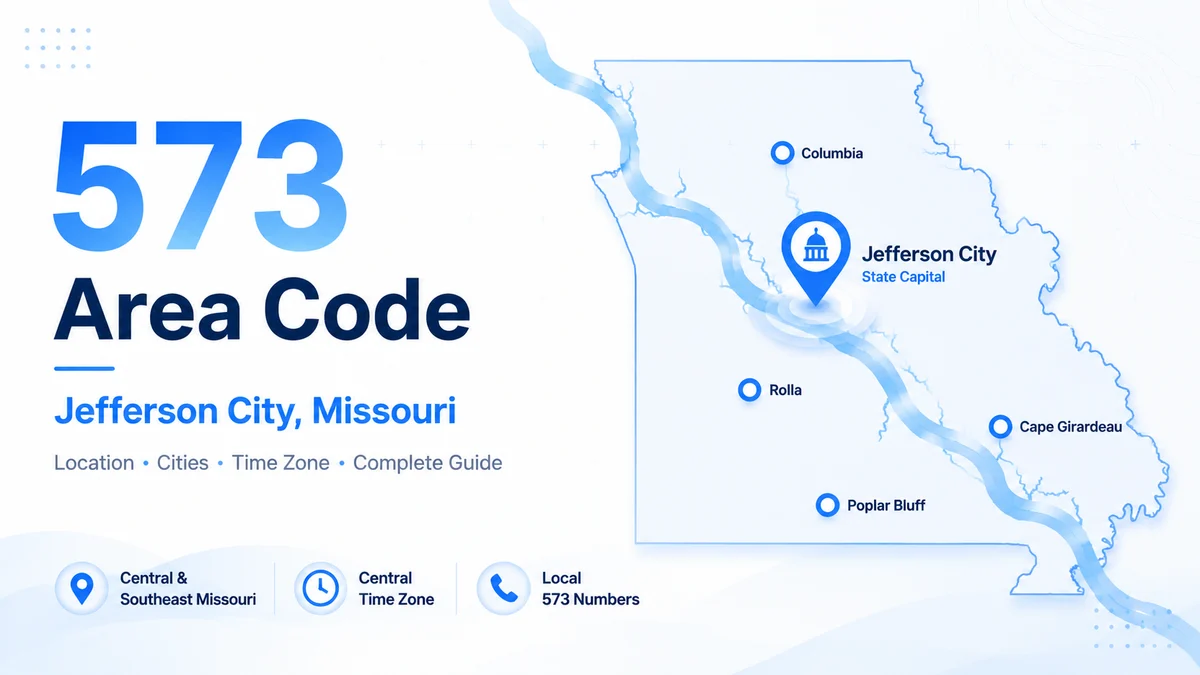
The 573 area code covers southeastern and south-central Missouri, serving the state capital, major universities, and a sweeping arc of communities from the Ozarks to the Mississippi River Delta. Knowing this code is valuable whether you received a call from a 573 area code number or want to establish a business presence in Missouri's government, academic, and tourism corridor. This guide walks through every major city in the 573 territory, Central Time zone details, the 1996 area code history, scam awareness, and how to get your own 573 line. Keep reading — by the end, you will know everything there is to know about this code and how to put it to work.
Key Takeaways
- The 573 area code is a geographic code covering southeastern and south-central Missouri, created in 1996 when the 314 area code was split.
- Jefferson City — Missouri's state capital — sits at the heart of the 573 zone, joined by Columbia, Cape Girardeau, Rolla, and Hannibal.
- The University of Missouri in Columbia is the flagship research university within the 573 territory, enrolling over 30,000 students each year.
- The entire 573 region operates on Central Time, placing it one hour behind the US East Coast and one hour ahead of Mountain Time.
- You can activate a virtual 573 number from anywhere in the world — no Missouri address or local SIM card required.
What Is the 573 Area Code?
The 573 area code is a geographic telephone prefix serving southeastern and south-central Missouri under the North American Numbering Plan (NANP). Unlike an overlay code — where two prefixes share the same territory — 573 is a standalone geographic code with its own defined territory, distinct from adjacent codes like 314 (St. Louis) and 417 (Springfield).
The geographic nature of this code means that a 573 number tells you exactly where the caller is located. Calls from 573 come from the Ozarks, the Capitol corridor, river towns along the Missouri and Mississippi, or the agricultural lowlands of the Bootheel region.
Geographic Code vs. Overlay
In an overlay, two area codes share the same cities and counties simultaneously. In a geographic code like 573, the territory is physically defined and distinct from neighboring prefixes. This makes the 573 area code one of the clearest regional identifiers in Missouri — a 573 call is unambiguously from southeastern or south-central Missouri.
Where Is the 573 Area Code Located?
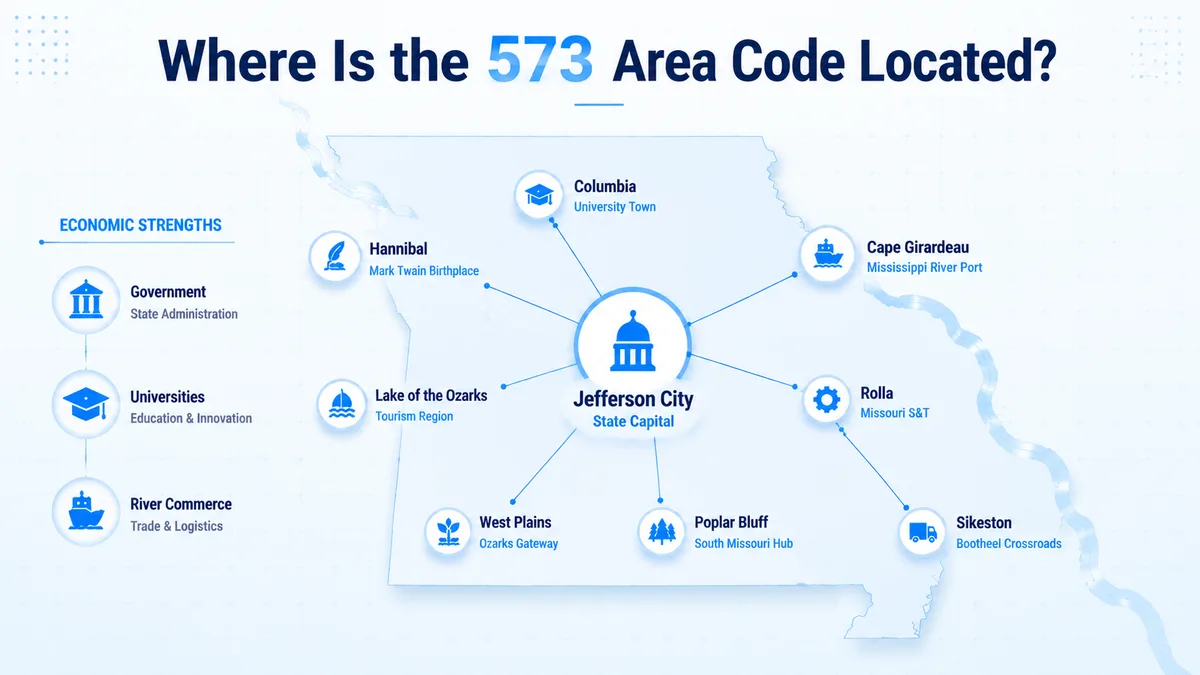
The 573 area code covers a broad swath of Missouri — anchored in the center by Jefferson City and Columbia, extending southeast to Cape Girardeau and the Mississippi River, and reaching south into the Ozarks highlands and the Missouri Bootheel.
- Cole County — Jefferson City (state capital)
- Boone County — Columbia (University of Missouri)
- Cape Girardeau County — Cape Girardeau
- Phelps County — Rolla (Missouri S&T)
- Butler County — Poplar Bluff
- Marion County — Hannibal (Mark Twain birthplace)
- Camden County — Lake of the Ozarks
- Howell County — West Plains
- Scott County — Sikeston
This territory spans several distinct economic zones — state government, university towns, river ports, Ozarks tourism, and the agricultural Mississippi lowlands.
Major Cities in the 573 Area Code
The 573 area code covers a wide variety of cities, each with its own economic identity and regional significance within Missouri.
Jefferson City
Jefferson City is the anchor of the 573 area code zone and Missouri's state capital, sitting on the south bank of the Missouri River in Cole County. As the seat of state government, it hosts the Missouri General Assembly, major state agencies, and tens of thousands of government employees across the metro area. The Jefferson City economy centers on government, healthcare, insurance, and legal services — industries where a local 573 number builds immediate trust.
Columbia and Rolla
Columbia is the largest city in the 573 territory and home to the University of Missouri — Missouri's flagship research university with over 30,000 enrolled students and a major academic medical center. The presence of Mizzou creates consistent telecom demand year-round: students, faculty, researchers, and out-of-state families all rely on local 573 communication. Rolla, in Phelps County, is home to Missouri University of Science and Technology (Missouri S&T), one of the top engineering programs in the country.
Cape Girardeau, Hannibal, and Beyond
Cape Girardeau is the commercial hub of southeastern Missouri, sitting on the Mississippi River and serving as a regional center for healthcare, retail, and media. Hannibal, in Marion County, is the birthplace of Mark Twain and a major heritage tourism destination that draws visitors from across the country each year. Additional communities including Poplar Bluff, Sikeston, and West Plains extend the 573 area code footprint from the Ozarks to the Mississippi Delta lowlands.
Targeting Missouri's State Capital, Mizzou's Academic Market, or the Ozarks Tourism Corridor? A Virtual 573 Number Gives You Immediate Local Credibility
Connect to Jefferson City's government sector, Columbia's university economy, and Cape Girardeau's regional commerce — from one virtual line, activated in minutes.
573 Area Code Time Zone
The 573 area code operates entirely on Central Time. In winter, the region observes Central Standard Time (CST, UTC−6). From the second Sunday in March through the first Sunday in November, it shifts to Central Daylight Time (CDT, UTC−5).
Missouri follows the standard US daylight saving schedule. The 573 zone's business hours align with Chicago, Dallas, and the 501 area code in neighboring Arkansas all year. For East Coast contacts, the 573 zone runs one hour behind New York and Washington D.C.
The best window for cross-country calls into the 573 zone is 8 AM to 3 PM Central — that keeps callers within regular business hours while accommodating both East and West Coast contacts comfortably.
History of the 573 Area Code
The 314 Area Code Split
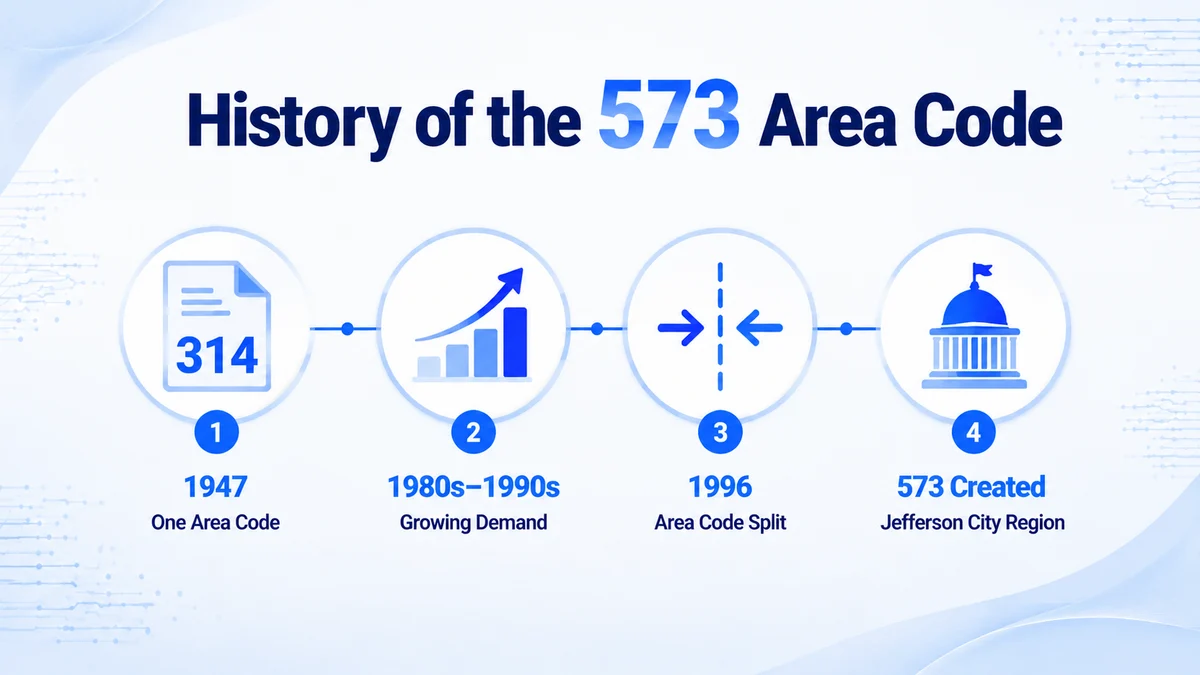
The 314 area code originally served all of Missouri when the North American Numbering Plan was implemented in the late 1940s. For decades, a single code reliably handled the entire state — but rapid expansion of business lines, fax machines, pagers, and early mobile phones strained the available number pool through the mid-1990s.
In 1996, NANPA responded by splitting 314 into three geographic zones. The 314 prefix remained with the St. Louis metropolitan area. A new 417 code went to southwestern Missouri — covering Springfield, Joplin, and the Branson tourism corridor. The remaining southeastern and south-central Missouri territory became the 573 area code, with Jefferson City at its governmental center.
Why the 573 Region Needed Its Own Code
The 573 territory is home to Missouri's state government, its flagship university, and a string of regional economic hubs that generate unusually high telecom demand relative to their population. Government agencies, healthcare systems, university departments, and agricultural operations all rely on high call volumes. The 539 area code in neighboring Oklahoma went through a similar regional expansion process as population and connectivity demands grew across the south-central US.
How to Get a Virtual Phone Number from CallMama
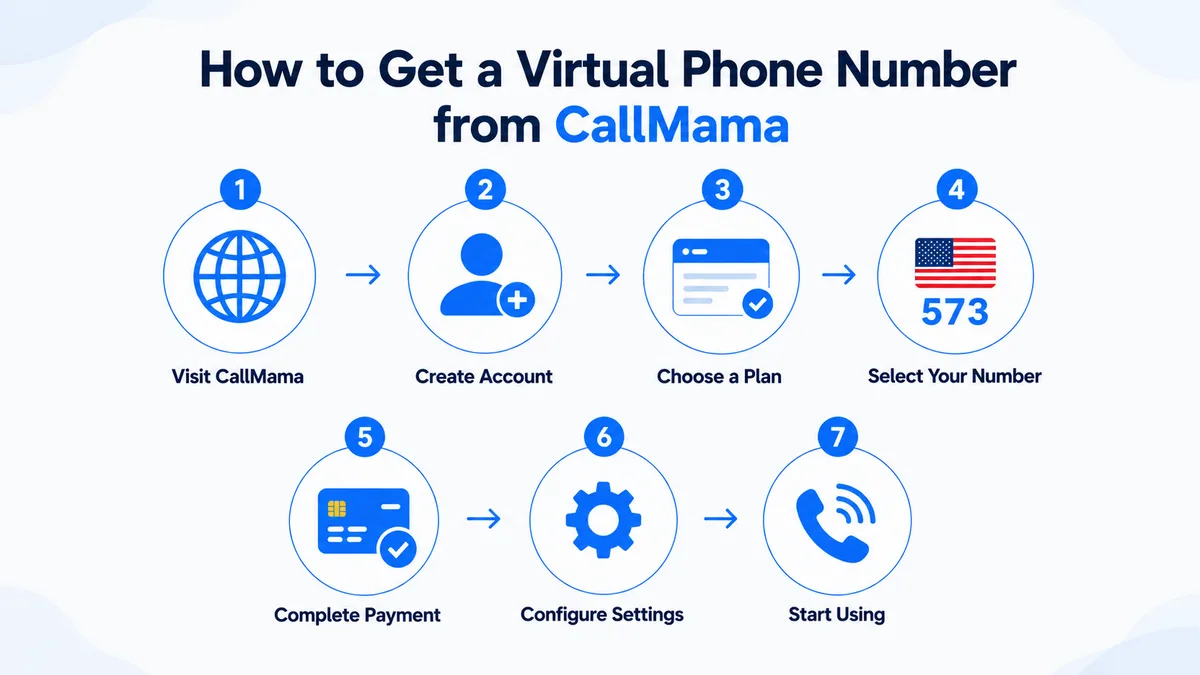
CallMama makes it quick and simple to activate a virtual 573 area code number from anywhere in the world — no Missouri address, no SIM card, and no long-term carrier contract needed. The platform delivers HD voice, two-way SMS, call forwarding, and voicemail, with full activation typically completed in under five minutes.
- Visit callmama.com or download the CallMama app from the App Store or Google Play.
- Create a free account using your email address.
- Choose a plan that fits your needs — monthly or pay-as-you-go options are available.
- Select your virtual number: choose United States, then filter by the 573 area code.
- Complete payment and activate your number instantly — no waiting period.
- Configure call forwarding, voicemail, and SMS settings to match your workflow.
- Start making and receiving calls from any device, anywhere in the world.
Why Businesses Choose the 573 Area Code
A local 573 area code number signals to Missouri customers that your business is part of their community. Local prefixes consistently produce higher answer rates than toll-free or out-of-state numbers — a significant advantage in relationship-driven industries like government contracting, healthcare, legal services, and university administration.
Industries with the strongest presence in the 573 zone include state government contracting, healthcare, higher education support services, agriculture, and Ozarks tourism. Remote businesses can hold a 573 phone number in Jefferson City or Columbia without maintaining a physical Missouri office.
The Lake of the Ozarks tourism economy — one of Missouri's largest leisure markets — generates strong seasonal call volumes that a local 573 number helps capture at the very first ring.
Is a 573 Area Code Call a Scam?
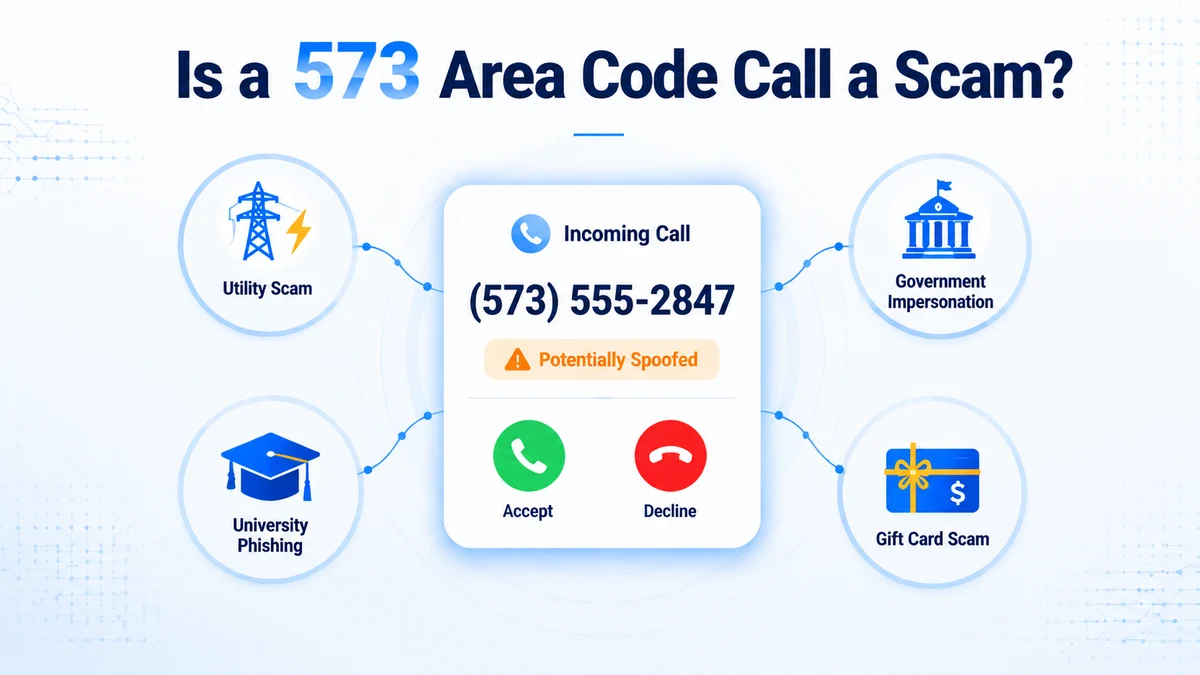
The 573 area code is a legitimate geographic prefix for southeastern and south-central Missouri and carries no inherent connection to fraud. Scammers regularly spoof recognizable local codes to improve answer rates, and Missouri codes are among those targeted.
Common spoofing patterns in the 573 zone include fake utility calls, state government agency impersonation, and university-related phishing attempts. If you receive an unexpected call from a 573 number demanding payment, account credentials, or gift card purchases, hang up and verify through the organization's official contact. According to FCC guidelines on caller ID spoofing, this practice is illegal — no legitimate Missouri state agency or utility will pressure you for sensitive information on an unannounced call.
Neighboring Area Codes
Knowing the codes surrounding the 573 zone helps you recognize calls from nearby states and Missouri's other major regions.
| Area Code | Region |
|---|---|
| 314 | St. Louis metropolitan area |
| 636 | St. Louis suburbs — St. Charles, Jefferson County |
| 417 | Southwestern Missouri — Springfield, Joplin |
| 660 | North-central Missouri — Sedalia, Moberly |
| 816 | Kansas City metro |
| 618 | Southern Illinois — Belleville, Carbondale |
| 870 | Eastern Arkansas |
| 501 | Central Arkansas — Little Rock |
The 573 territory sits at the crossroads of the Midwest and the mid-South, bordering codes from four different states.
Conclusion
The 573 area code is Missouri's eastern and south-central telephone corridor — a geographic code built to serve one of the most economically layered regions in the Midwest. From Jefferson City's statehouse and Columbia's research university to Hannibal's literary heritage and the Lake of the Ozarks' tourism economy, every 573 area code number carries the credibility of a region that touches state government, higher education, healthcare, and agriculture simultaneously. Understanding this code — its history, geography, and Central Time zone — puts you fully in command of any 573 interaction. Knowing these details also helps you spot spoofed calls and take full advantage of local virtual number options.
Activating a local 573 area code number requires no Missouri residency, no carrier contract, and no hardware. Virtual phone providers have made it possible to hold a trusted Jefferson City or Columbia number from anywhere in the country. A 573 number on your caller ID improves answer rates, builds local trust, and opens doors in one of Missouri's most active business regions. Take the next step and activate your number in minutes.
Ready to Connect With Missouri's Government Corridor, University Market, and Ozarks Tourism Economy?
A virtual 573 area code number activates instantly and positions your outreach in the heart of southeastern Missouri — no local office required.
