Introduction
The 480 area code covers the East Valley of metro Phoenix, Arizona — one of the fastest-growing technology and business corridors in the American Southwest. Whether you received a call from a 480 phone number or need a local Arizona number for your business, this guide covers everything you need to know. You will find a complete breakdown of every city in the 480 zone, Arizona's unique no-daylight-saving time rule, the full prefix history, and how to spot scam calls using spoofed East Valley numbers. Every fact about the 480 area code is here — read on.
Key Takeaways
- The 480 area code serves the East Valley of metro Phoenix, covering Scottsdale, Tempe, Mesa, Chandler, Gilbert, and Paradise Valley, among many other communities.
- Area code 480 was created in 1999 as a geographic split from the 602 area code, which had served the entire Phoenix metro since 1947.
- Arizona does not observe daylight saving time, meaning the 480 zone stays on Mountain Standard Time (MST, UTC-7) year-round — a fact every business scheduler must know.
- Scottsdale and the broader 480 corridor host major employers including GoDaddy, Intel's Chandler campus, Arizona State University, and dozens of Fortune 500 regional offices.
- Virtual 480 phone numbers are available through VoIP providers, giving any business immediate East Valley credibility without a physical Arizona office.
What Is the 480 Area Code?
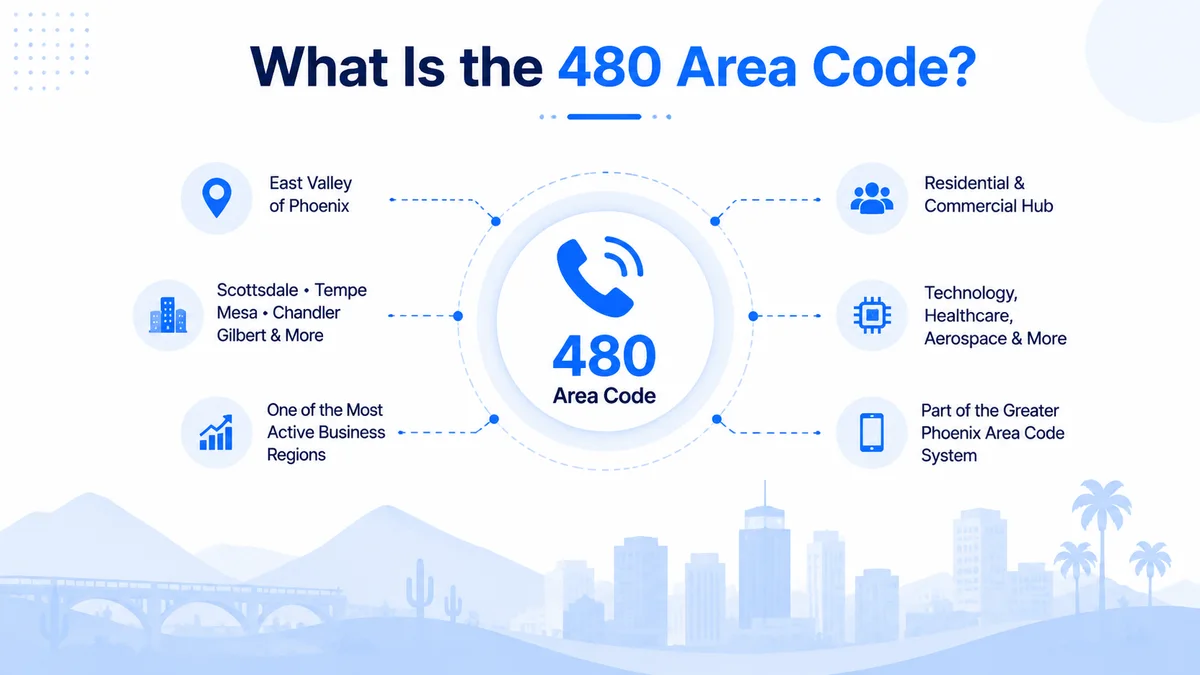
The 480 area code is a telephone prefix assigned to the East Valley of metro Phoenix under the North American Numbering Plan (NANP). It covers a dense suburban corridor stretching from Scottsdale's luxury resort and technology districts south through Mesa, Chandler, and Gilbert to the fast-growing communities of Queen Creek and Apache Junction.
A 480 number immediately signals the Phoenix metro's most commercially active quadrant. The East Valley generates billions in annual economic output across technology, healthcare, hospitality, and aerospace — making this one of the highest-value local prefixes in the Sun Belt. Few area codes in the American Southwest carry the brand authority that a 480 prefix delivers to businesses selling into the Scottsdale and East Valley market.
The 480 zone is one of three area codes serving greater Phoenix today, alongside 602 (central Phoenix) and 623 (West Valley). This three-way split reflects the extraordinary population growth the region experienced through the 1990s and 2000s.
Where Is the 480 Area Code Located?
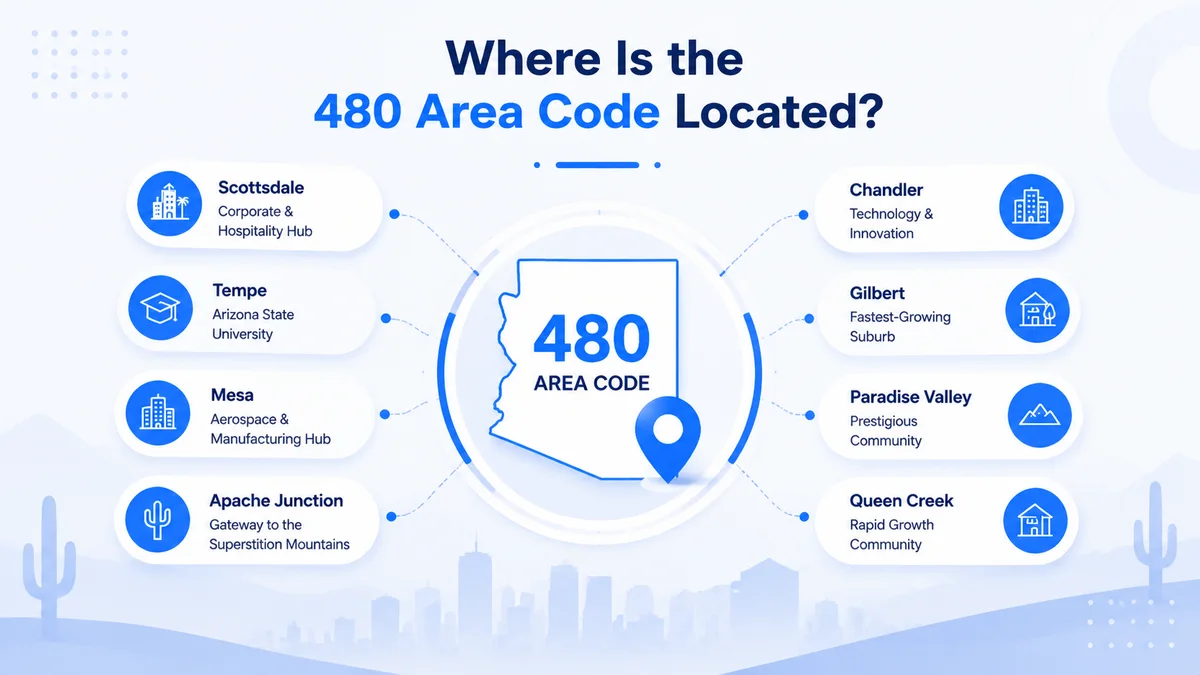
The 480 area code covers the East Valley of Maricopa County — a sprawling suburban region east and southeast of downtown Phoenix. Its geography spans from the McDowell Mountains in the north to the Gila River Indian Community in the south, and from the Salt River Indian Community in the west to the Superstition Mountains near Apache Junction in the east.
Scottsdale — Corporate and Hospitality Hub
Scottsdale anchors the northern half of the 480 territory and drives the region's reputation as a premier business and hospitality destination. Home to GoDaddy's corporate headquarters and dozens of major regional offices, Scottsdale consistently ranks among the top US cities for economic growth and startup density. Old Town Scottsdale and the North Scottsdale technology corridor generate the highest volume of business telephone activity in the entire 480 footprint.
Tempe and Arizona State University
Tempe sits at the geographic center of the East Valley and hosts Arizona State University — the largest public university in the United States by enrollment. The ASU Research Park and surrounding innovation district draw technology firms, healthcare startups, and venture-backed companies into the 480 zone each year, fueling intense business communication demand across the prefix.
Mesa, Chandler, Gilbert, and Beyond
Mesa is the third-largest city in Arizona, anchoring the southeastern quadrant of the 480 area code with manufacturing, aerospace, and healthcare as its economic pillars. Chandler's Intel semiconductor campus — one of the largest chip production facilities in North America — powers the southern technology corridor, while Gilbert has emerged as one of the fastest-growing suburban cities in the entire country. Paradise Valley, Queen Creek, and Apache Junction complete the geographic footprint of the prefix.
The 480 Time Zone — Arizona's No-DST Rule
The 480 area code follows Mountain Standard Time (MST) at UTC-7 year-round, with one critical distinction that sets Arizona apart from every other Mountain Time state: Arizona does not observe daylight saving time. While Colorado, Utah, and New Mexico spring their clocks forward each March, the 480 zone stays fixed at UTC-7 all twelve months.
This creates a scheduling wrinkle for businesses coordinating calls with 480 contacts from other regions:
- From Eastern Time (ET): The 480 zone is 2 hours behind ET in winter and 3 hours behind during Eastern Daylight Time (March–November).
- From Central Time (CT): The 480 zone is 1 hour behind CT in winter and 2 hours behind during Central Daylight Time.
- From Pacific Time (PT): Arizona and Pacific align at UTC-7 during summer — when PT observes PDT. In winter, PT drops to UTC-8, making 480 contacts 1 hour ahead.
Standard Arizona business hours run Monday through Friday, 9 AM to 5 PM MST. Note that the Navajo Nation in northeastern Arizona does observe daylight saving time, but it falls entirely outside the 480 area code's geographic boundaries.
History of the 480 Area Code
The 480 area code was established in 1999 as a geographic split from the 602 prefix, which had served the entire Phoenix metropolitan area since 1947. By the late 1990s, explosive growth across the East Valley — driven by semiconductor manufacturing in Chandler, corporate relocations to Scottsdale, and surging enrollment at Arizona State University — pushed the 602 number pool toward exhaustion faster than regulators had projected.
The North American Numbering Plan Administrator responded by carving the East Valley into the new 480 prefix while simultaneously creating 623 for West Valley communities such as Glendale, Peoria, Surprise, and Buckeye. The 602 prefix was retained for the City of Phoenix proper. For businesses evaluating area codes across the Southwest, 480 and its sister prefixes represent one of the most carefully planned three-way splits in NANPA history.
The 480 split took effect in March 1999, giving Scottsdale, Tempe, Mesa, Chandler, and Gilbert their own distinct telephone identity for the first time.
The East Valley Answers Local — a 480 Prefix Gets Your Call Picked Up When a Toll-Free Line Goes to Voicemail
Activate a virtual 480 phone number in minutes and route it to any device, giving you instant Arizona credibility from anywhere in the world.
How to Get a Virtual Phone Number from CallMama
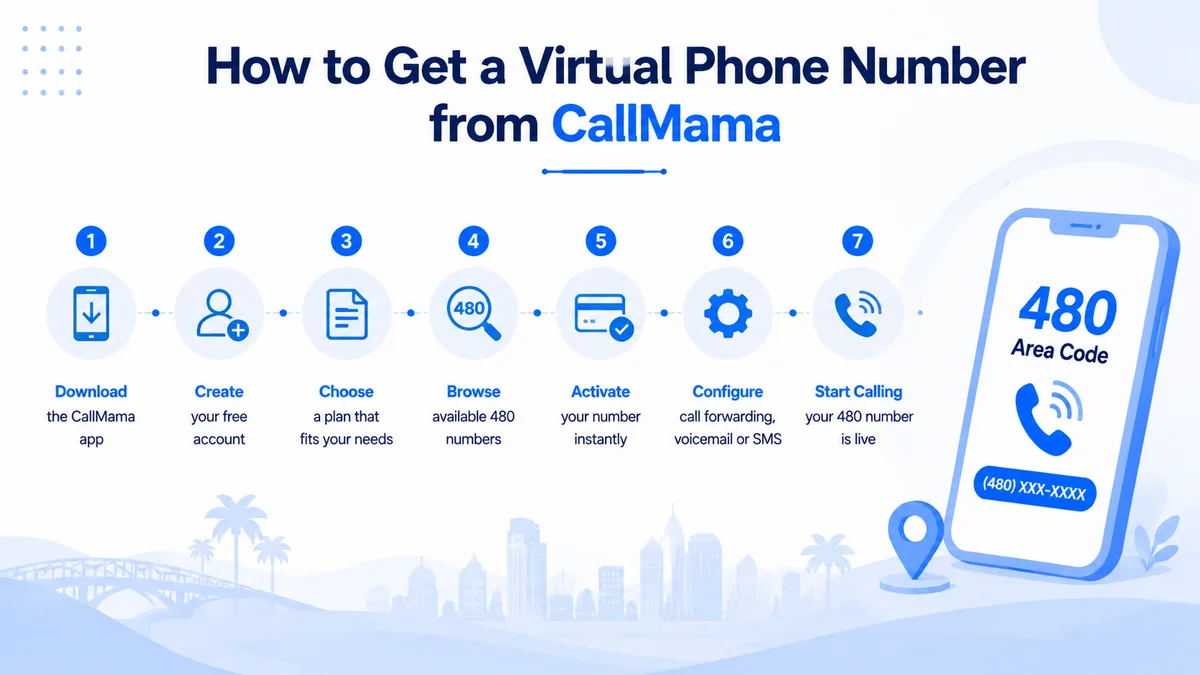
CallMama provides virtual local phone numbers across hundreds of US area codes, including 480 numbers for Scottsdale, Tempe, Mesa, Chandler, and the broader East Valley market. Instant activation and flexible no-contract plans make it simple to build a credible Arizona presence from anywhere in the world.
- Download the CallMama app from the App Store or Google Play to get started.
- Create a free account using your email address — no credit card required at signup.
- Choose a plan that fits your needs — monthly or pay-as-you-go options are both available.
- Browse available 480 area code numbers and select the one that best fits your brand.
- Complete payment and activate your number instantly from your dashboard.
- Configure call forwarding, voicemail, or SMS routing to match your business workflow.
- Start making and receiving calls — your 480 number goes live the moment activation completes.
480 Area Code Scam Calls — What to Watch For
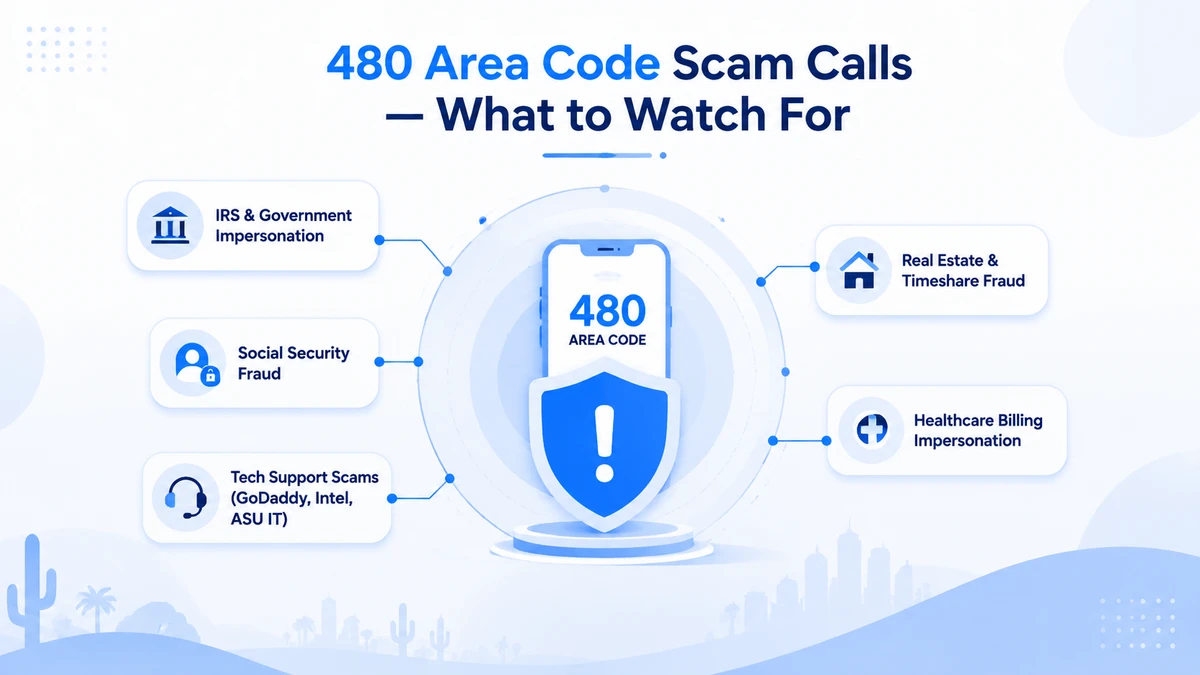
Scammers spoof the 480 area code to make calls appear to originate from Scottsdale or the broader Phoenix metro — trading on the credibility of an affluent East Valley prefix to lower recipients' guard. Arizona reports above-average phone fraud activity, and 480 spoofing follows well-documented patterns seen across high-income suburban prefixes nationwide.
Common scam types linked to spoofed 480 numbers include:
- IRS and government impersonators threatening legal action over fabricated federal debts
- Social Security fraud claiming your number has been suspended or linked to criminal activity
- Tech support scams impersonating GoDaddy, Intel, or Arizona State University IT departments
- Real estate and timeshare fraud targeting Scottsdale's high-net-worth residential market
- Healthcare billing fraud impersonating Banner Health, Mayo Clinic Arizona, or Honor Health
Number availability within the 480 territory is tracked through the NANPA database, which publishes all active and available US area code assignments nationwide. Hang up immediately on any unsolicited 480 call demanding payment or personal data, and verify through official channels before responding. Similar spoofing tactics have surfaced around the 414 area code in Milwaukee.
Why a 480 Prefix Builds Arizona Business Credibility
The East Valley's standing as Arizona's technology and innovation hub means a 480 area code prefix carries immediate market recognition for businesses serving the Phoenix metro. Research consistently shows that buyers in Scottsdale, Chandler, and Mesa answer calls from virtual numbers at significantly higher rates than toll-free or out-of-state lines.
Industries that benefit most from a 480 phone number include:
- Technology and SaaS companies targeting the Scottsdale startup and enterprise corridor
- Healthcare sales teams reaching Banner Health, Dignity Health, and the Mayo Clinic Arizona network
- Aerospace and manufacturing suppliers calling into Chandler's Intel campus and Gilbert's defense contractors
- Real estate and mortgage professionals targeting the East Valley's active residential and commercial markets
- Hospitality and event management companies serving Scottsdale's world-class resort and conference sector
A virtual local number removes every geographic barrier — activate in minutes with no Arizona address required.
Number availability across the country is tracked through the NANPA database.
Conclusion
The 480 area code defines the East Valley of metro Phoenix — a region shaped by Arizona State University's research ecosystem, Scottsdale's corporate and resort economy, and the semiconductor corridor running through Chandler and Gilbert. From its 1999 split from the original 602 prefix to its current role as the telephone identity of Arizona's most commercially dynamic suburbs, this 480 area code carries market weight that far exceeds its geographic boundaries. You now know every major city it covers, why Arizona's no-DST rule creates unique scheduling challenges for every caller reaching a 480 phone number, and how to protect yourself from spoofed East Valley calls. All the information you need to navigate this prefix with confidence is in one place.
If a virtual 480 number is the right next step for your Arizona market strategy, getting started is faster and more affordable than most businesses expect. A local 480 area code prefix signals genuine East Valley presence to every Scottsdale buyer, Tempe contact, and Mesa client before the first word is spoken. You do not need a Chandler office or a Scottsdale address to carry the telephone identity this market recognizes instantly. Claim your number today and start every Arizona call with the local credibility your business deserves.
Every Scottsdale Buyer and Chandler Supplier Call Lands Better With a Number They Recognize as Local
A virtual 480 phone number activates in minutes, routes to any device worldwide, and requires no Arizona office or long-term contract to get started.
