Introduction
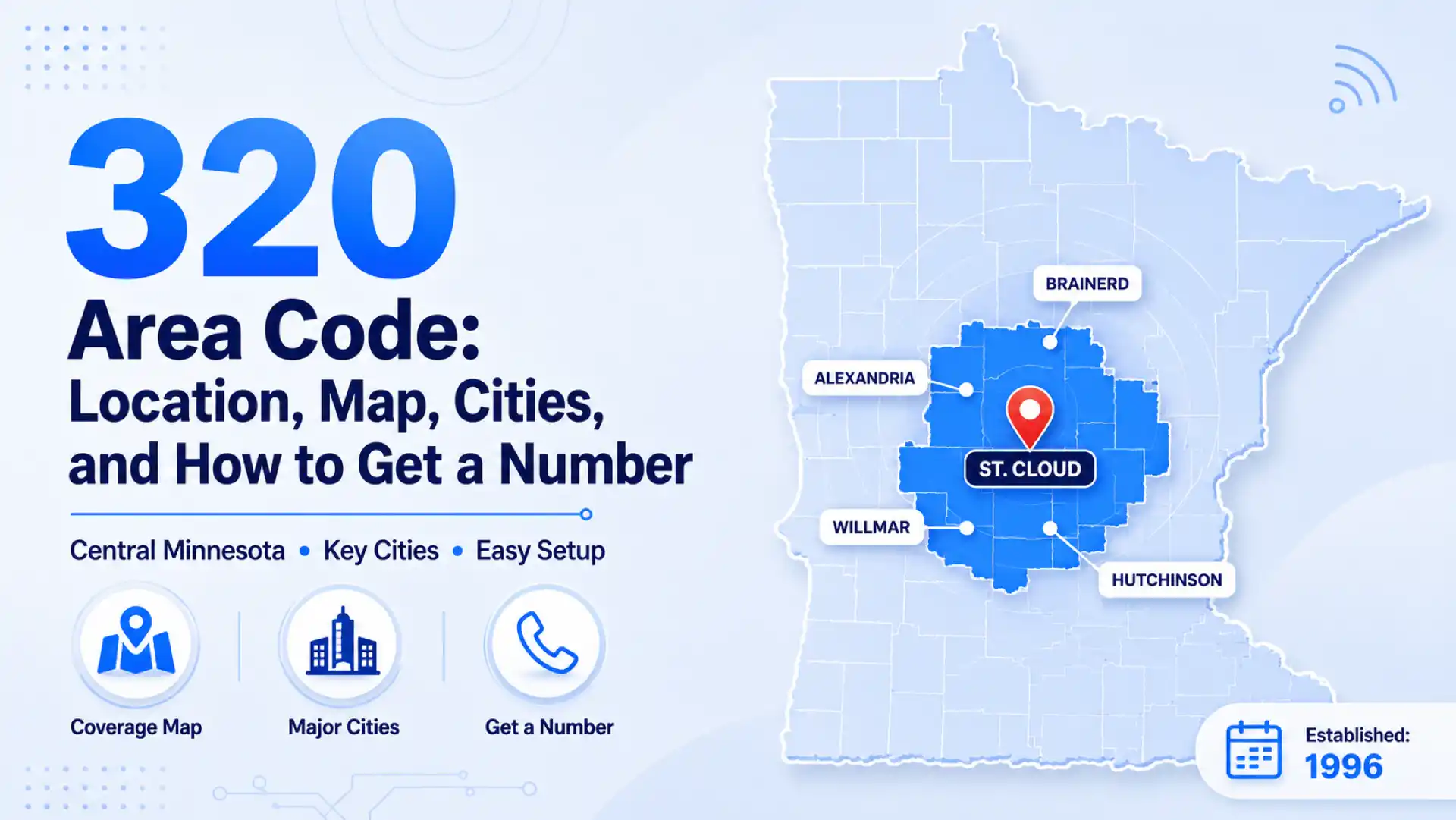
The 320 area code covers most of central Minnesota, and this guide explains exactly where it reaches, which cities it serves, and how to claim a number of your own. Knowing the 320 area code matters whether you are calling a local business, screening an unfamiliar caller, or building a presence in the heart of the state. In the next few minutes you will learn its location, time zone, history, the cities it covers, and the simple steps to set up a virtual line. Stick around, because by the end you will know how to sound local in Minnesota without buying a second phone.
Key Takeaways
- The 320 area code serves central Minnesota, including Saint Cloud, Willmar, and Alexandria.
- It sits in the Central Time Zone, so plan calls around CST or CDT hours.
- The code went live on March 17, 1996, after a split from area code 612.
- A virtual 320 phone number lets you reach Minnesota contacts with a trusted, familiar local number.
- A reliable virtual provider makes getting a 320 number quick, affordable, and fully app-based.
What Is the 320 Area Code?
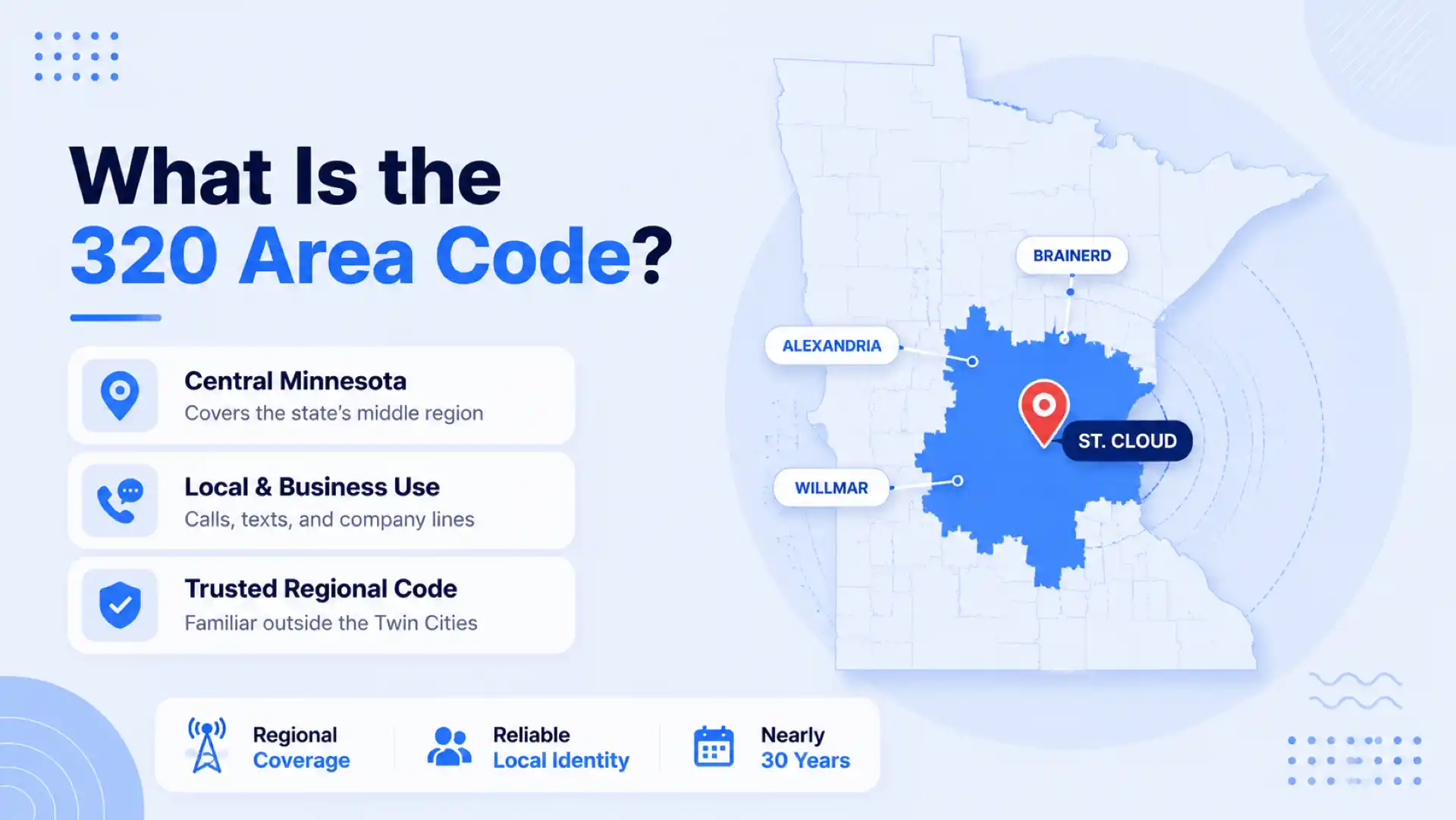
The 320 area code is one of Minnesota's primary telephone codes, and it has been part of daily life in the state for nearly three decades. It serves a wide stretch of central Minnesota that sits outside the busy Twin Cities metro region. Residents and businesses rely on it every day for phone calls, text messages, and dedicated company lines. Because it spans so much of the state's middle, the code feels familiar and trustworthy to people who live and work there.
Where Is Area Code 320 Located?
The 320 area code covers most of central Minnesota, stretching across a large rural and small-city region. It spans roughly 29 counties and 211 zip codes, which makes it one of the broader coverage areas in the state. The Twin Cities metro, including Minneapolis and Saint Paul, is not part of it, since that region uses separate codes such as 612, 651, and 763. This wide footprint means a single code links dozens of communities, lake towns, family farms, and fast-growing suburbs together. If you see this code on your screen, the caller is almost always somewhere in the middle of Minnesota.
What Time Zone Does Area Code 320 Use?
Area code 320 sits firmly in the Central Time Zone, the same zone as most of Minnesota. During the colder months it follows Central Standard Time (CST), which runs six hours behind UTC. From spring through fall it shifts to Central Daylight Time (CDT) for daylight saving. If you are calling from the East Coast, the region is one hour behind you, and from the West Coast it is two hours ahead. A safe window for calls is mid-morning to early evening local time, when most people are awake and available.
Cities and Counties Covered by the 320 Area Code
The 320 area code reaches about 148 cities across central Minnesota, ranging from regional hubs to quiet small towns. The largest population centers are Saint Cloud, Willmar, Alexandria, Little Falls, and Hutchinson, which anchor much of the region's economy. Smaller communities such as Buffalo, Litchfield, Glencoe, and Morris also fall inside its borders. Saint Cloud, the biggest city in the region, serves as a hub for shopping, healthcare, and higher education. Together these cities and counties form a connected region built on agriculture, manufacturing, healthcare, and a growing base of remote workers.
For a look at another regional code, see our 307 area code guide.
History of the 320 Area Code
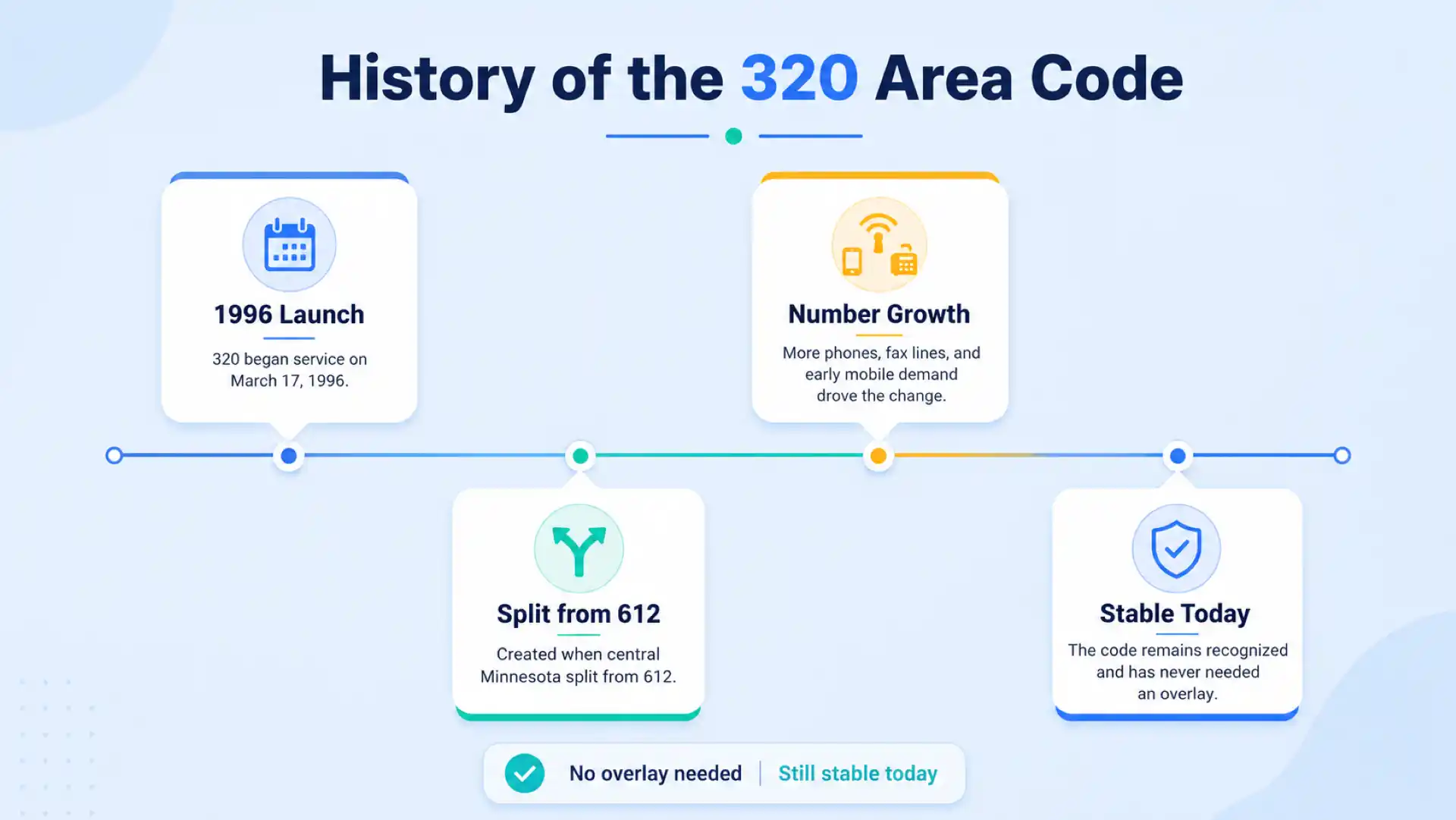
The 320 area code began service on March 17, 1996, giving central Minnesota its own identity on the phone map. It was created in a split from area code 612, which once stretched across a huge portion of the state. As telephones, fax lines, and early mobile phones spread, the older code simply ran short of available numbers. The split kept the busy Twin Cities on 612 and handed the central region a fresh, dedicated code with room to grow. Decades later, the code remains stable and widely recognized, and it has not needed an overlay to keep up with demand. That stability is one reason locals still treat it as a clear marker of central Minnesota.
Now that you know where the 320 area code reaches, you can sound local anywhere across central Minnesota.
A virtual line connects you to Saint Cloud, Willmar, Alexandria, and beyond without carrying a second device.
Why Get a 320 Phone Number?
A 320 number signals to Minnesota contacts that your call is local, relevant, and worth answering. Studies of call behavior show that people pick up local calls far more often than calls from unknown or distant codes. For a small business, a local line also creates the impression that you are rooted in the community you serve. Best of all, you can enjoy these benefits without relocating, signing a long contract, or buying extra hardware. A virtual line works over the internet, so you can answer calls on your phone, tablet, or laptop wherever you happen to be.
Common Uses for a Local Line
Remote workers rely on a local line to keep a Minnesota presence while living somewhere else. Online sellers list one so nearby buyers feel confident ordering from a neighbor rather than a stranger. Local service providers, from plumbers to tutors, use it to look established in the towns they cover. Families use it to stay close and reachable for relatives back home in the region. Each of these uses rests on one simple idea: a familiar local code builds quick, lasting trust.
Businesses expanding into other markets often check our 501 area code guide too.
Are Calls from the 320 Area Code Safe?
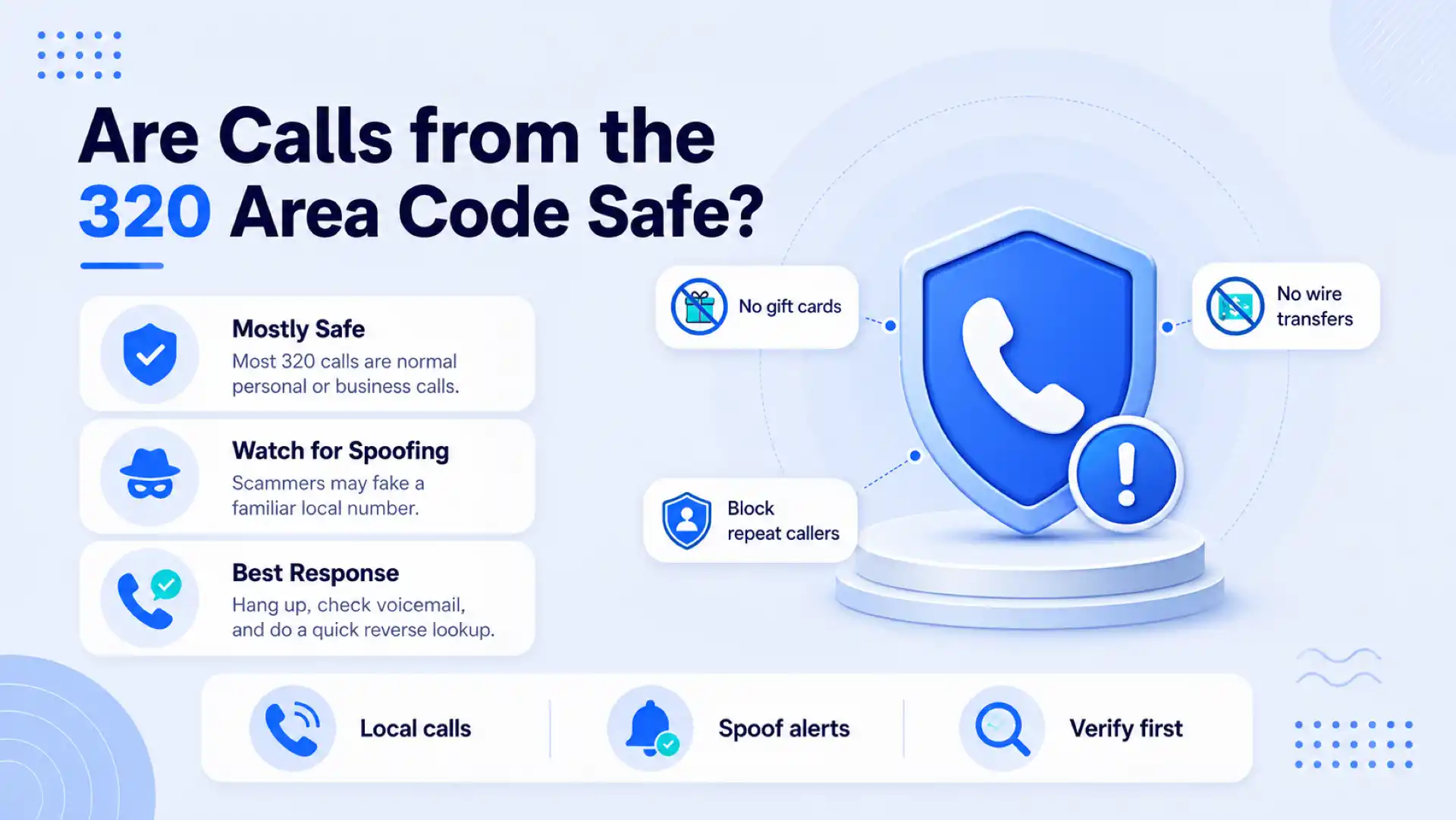
Most calls from area code 320 are ordinary personal or business calls with nothing to worry about. Still, scammers sometimes copy local codes through a trick called spoofing, hoping a familiar number makes you answer. If an unknown caller pressures you for money, passwords, or personal details, the safest move is to hang up. A quick reverse phone lookup can help you confirm who is really on the other end before you call back.
How to Spot a Spoofed Call
A spoofed call often shows a local code but comes from a stranger with an urgent, scripted demand. Real callers rarely ask for gift cards, wire transfers, or your full Social Security number over the phone. When something feels off, let the call go to voicemail and search the number online. You can also report repeat offenders to your carrier and block them in a single tap.
How to Get a Virtual Phone Number from CallMama
CallMama is a virtual phone app that lets you pick a local number and start calling within minutes. It stands out for low per-minute rates, clear call quality, and a huge selection of numbers from the United States and more than 200 countries. With CallMama, you manage calls, texts, and your number from one simple app on any device.
- Visit callmama.com or download the app from the Apple App Store or Google Play.
- Create a free account using your email address or existing phone number in under a minute.
- Choose a plan that matches how often you expect to call and text.
- Select your virtual number, then pick the United States and the 320 area code for central Minnesota.
- Confirm your choice and activate the number instantly, with no paperwork or store visit.
- Start making and receiving calls and texts from your new local line right away.
For official assignment records, the NANPA database tracks every code in the country.
Who Benefits Most from a Local Minnesota Line?
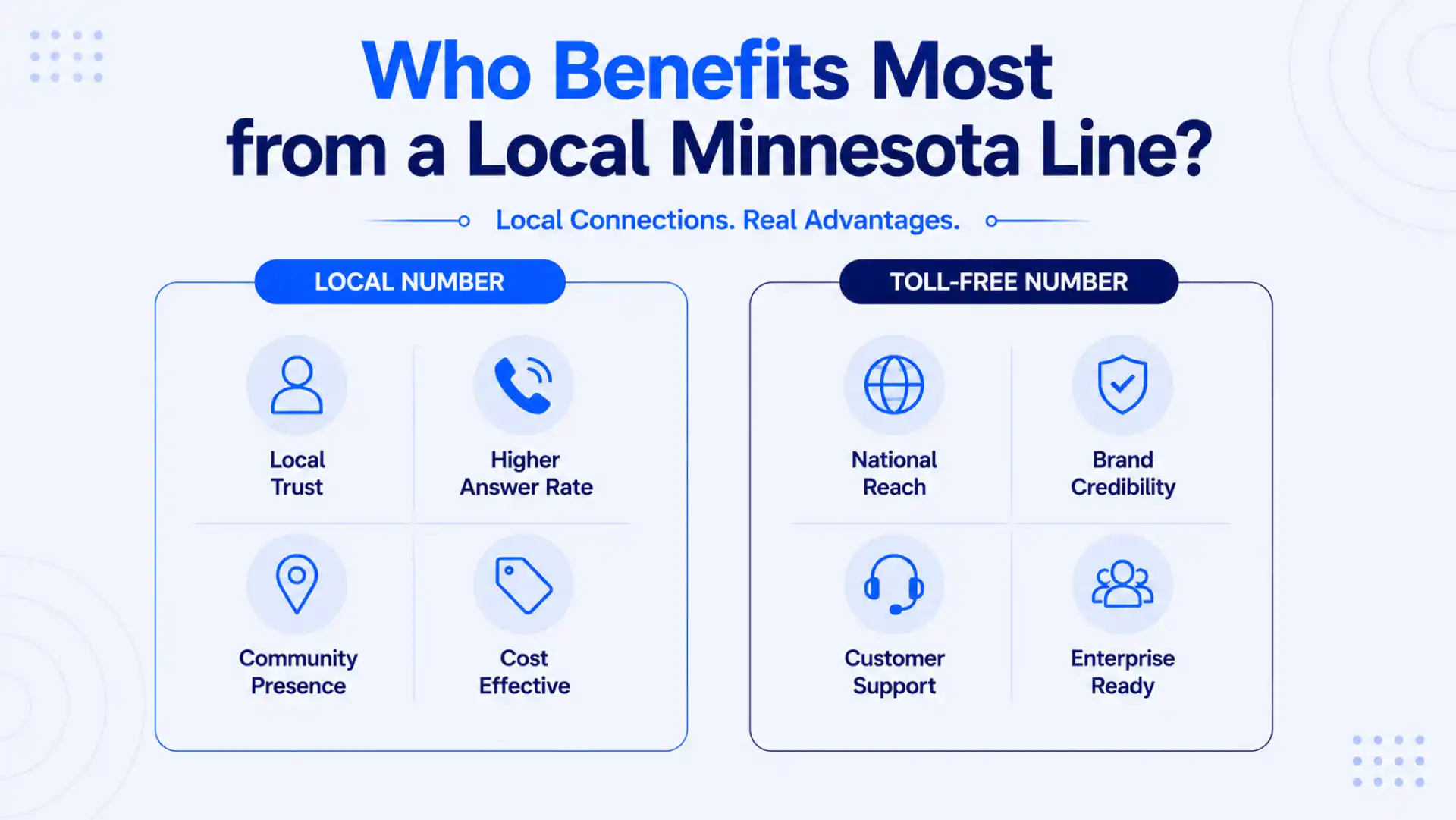
Small businesses often gain the most, since a local number wins customer trust and lifts answer rates. Freelancers and remote workers use one to serve Minnesota clients smoothly from anywhere in the world. Travelers, snowbirds, and students keep a single reliable number even as they move around the country. Even families lean on a local line so loved ones always recognize the call and pick up.
Local Number vs. Toll-Free Number
A local line feels personal and familiar to the neighbors and customers you want to reach. A toll-free number, by contrast, suits large national brands that serve callers in every state. For central Minnesota, a local code almost always makes the stronger impression. It quietly tells every caller that you belong to the community you serve, which is exactly what wins repeat business.
Conclusion
The 320 area code connects most of central Minnesota, linking towns from Saint Cloud all the way to Alexandria. You now understand its location, its Central Time Zone, and its launch back in 1996. You also know which cities it covers, why scammers sometimes mimic it, and how a local line builds genuine trust. That knowledge puts you a step ahead whether you plan to call, screen a caller, or set up a number of your own.
Setting up your own 320 number is now the easy part of the whole process. A virtual line gives you a real Minnesota presence in just a few minutes, with no contracts or extra devices. The next step is simply choosing a plan and picking the digits you like best. Take that step today, and you can start sounding local and earning trust right away.
Your central Minnesota number is ready and waiting, and claiming it takes only a couple of minutes.
Pick your digits, activate the line instantly, and start building local trust from day one.
