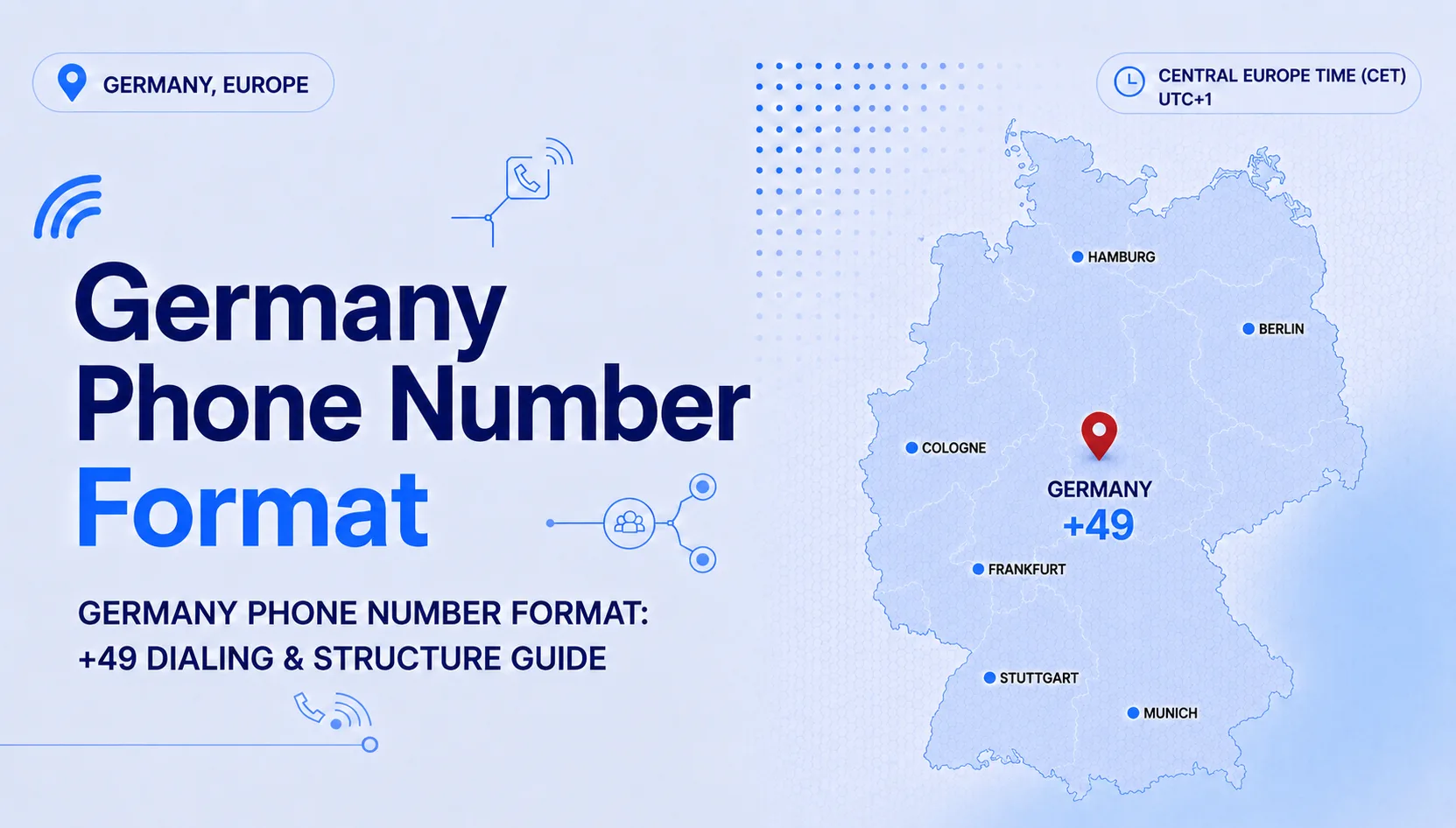
Introduction
A Germany phone number can look confusing at first, with its +49 code, short city area codes, and mobile prefixes that all follow their own rules. Getting the format wrong is one of the most common reasons calls and texts to Germany fail to connect.
This guide breaks down exactly how a Germany phone number is built, how to read each part, and how to dial one correctly from anywhere in the world. By the end, you will format German landline and mobile numbers with confidence and never guess at a missing digit again.
Key Takeaways:
- Every Germany phone number sits behind the +49 country code under the global numbering plan.
- German landline area codes range from 2 to 5 digits — Berlin is 30, Munich is 89, Hamburg is 40.
- All German mobile numbers start with a 1 after the country code, using prefixes like 151, 170, and 176.
- Always drop the leading 0 from the area code or mobile prefix when dialing from abroad.
What Is a Germany Phone Number?
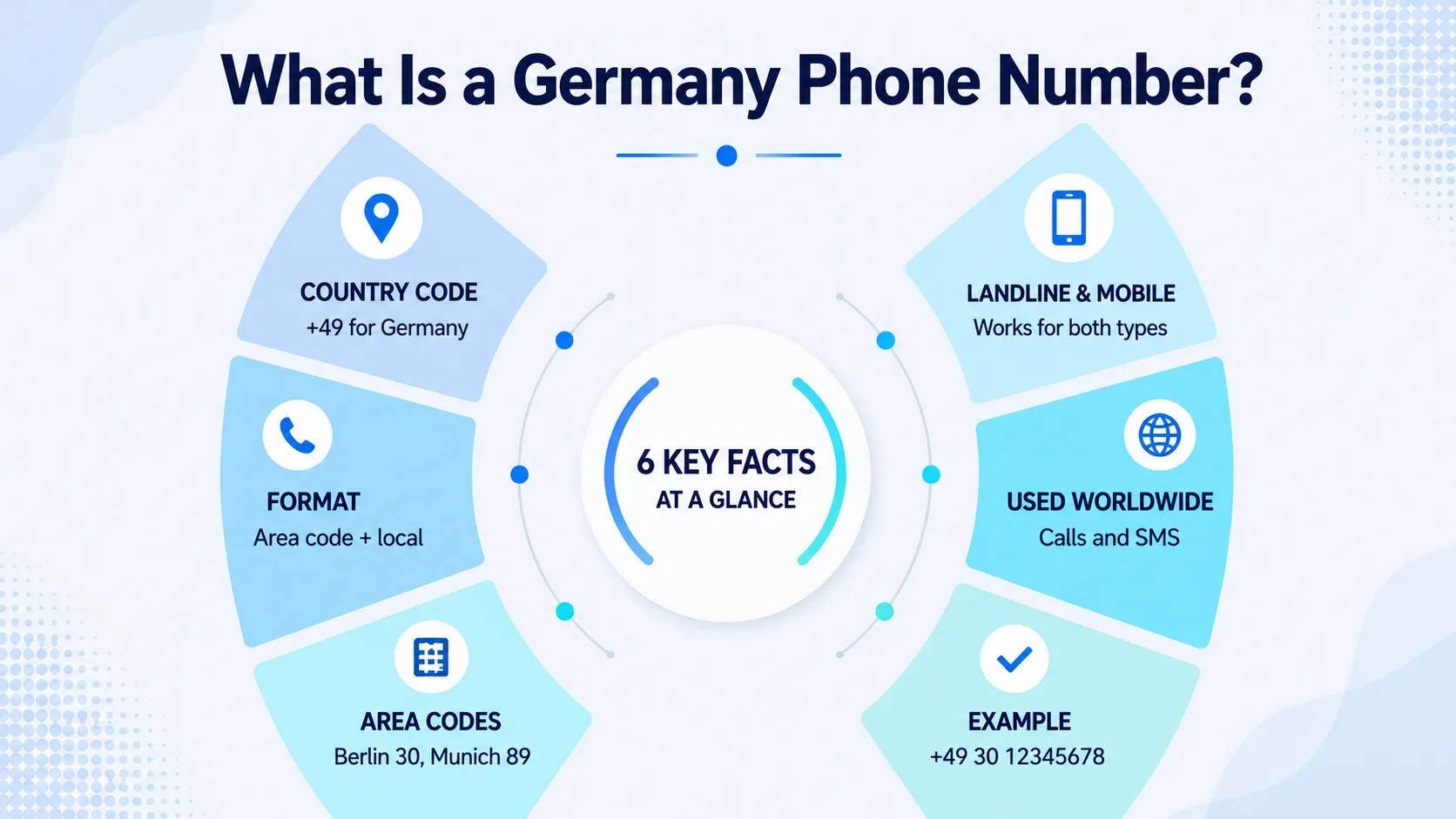
A Germany phone number is any line registered under the +49 country code, the prefix assigned to Germany in the global numbering plan. That single code covers every landline and mobile number in the country.
The digits right after +49 tell you the most. For a landline, they form a city area code — 30 for Berlin, 89 for Munich, 40 for Hamburg. For a mobile line, they always start with a 1, regardless of where the owner lives.
Recognizing this structure helps you spot a Germany phone number instantly, whether it appears on caller ID, a business card, or a website contact page.
Germany also allows number portability, so a person can switch carriers without changing their line. That means a contact you save today is likely to stay reachable at the same number for years, no matter which network they use.
How German Phone Numbers Are Formatted
The standard German phone number format follows a clear pattern: +49 (0)30 12345678. The +49 is the country code, 30 is the area code, and the rest is the subscriber's local number.
Breaking Down Each Segment
Every German phone number format splits into three parts. The country code (+49) connects the call to Germany. The area code or mobile prefix identifies the city or the mobile network. The subscriber number is the unique line at the end.
- Country code: +49, used for every call into Germany from abroad
- Area code: 2 to 5 digits for landlines (30 for Berlin, 221 for Cologne)
- Mobile prefix: starts with 1 — common ones are 151, 170, 171, 176, and 179
- Subscriber number: the final digits that reach a specific phone
The leading 0 you see in the domestic German phone number format — like 030 for Berlin — is always dropped once you add the +49 country code for an international call.
Mobile vs. Landline Formatting
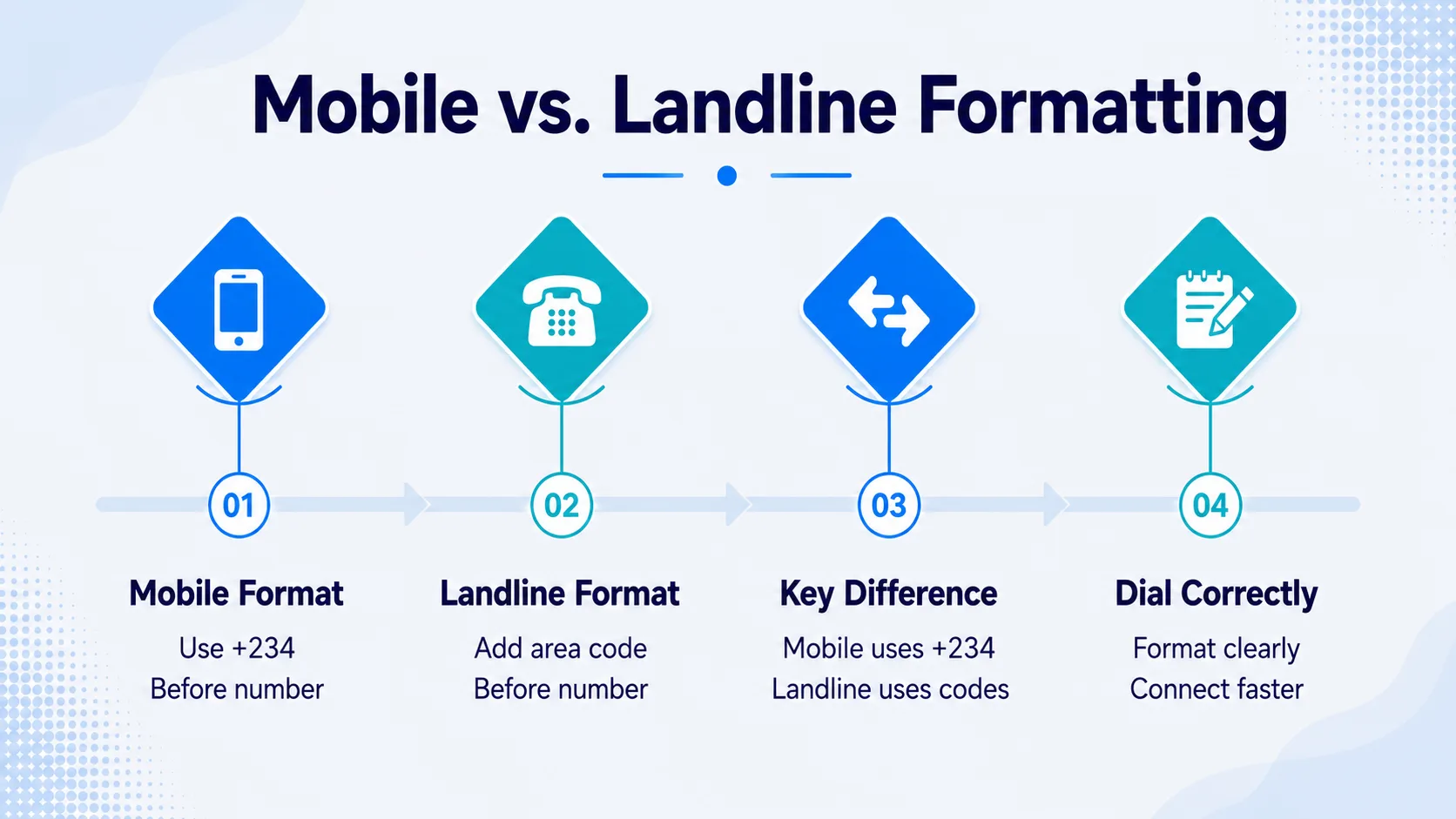
The biggest difference in any German phone number format is the digit right after the country code. Mobile numbers always begin with a 1, while landlines begin with 2 through 9.
A German mobile number looks like +49 151 1234567 and runs the same length no matter which network issued the SIM. A landline like +49 30 12345678 varies in length, since Berlin's short area code leaves room for more subscriber digits than a small town's longer area code.
This matters when you save a contact. A saved mobile entry should always include the full 1-based prefix, while a landline entry depends on the city's area code length.
Cost can differ too. Calls to German mobile numbers often carry higher per-minute rates on traditional carriers than calls to landlines, which is one reason many frequent callers switch to a data-based line that charges the same flat rate for both.
How to Dial a Germany Phone Number
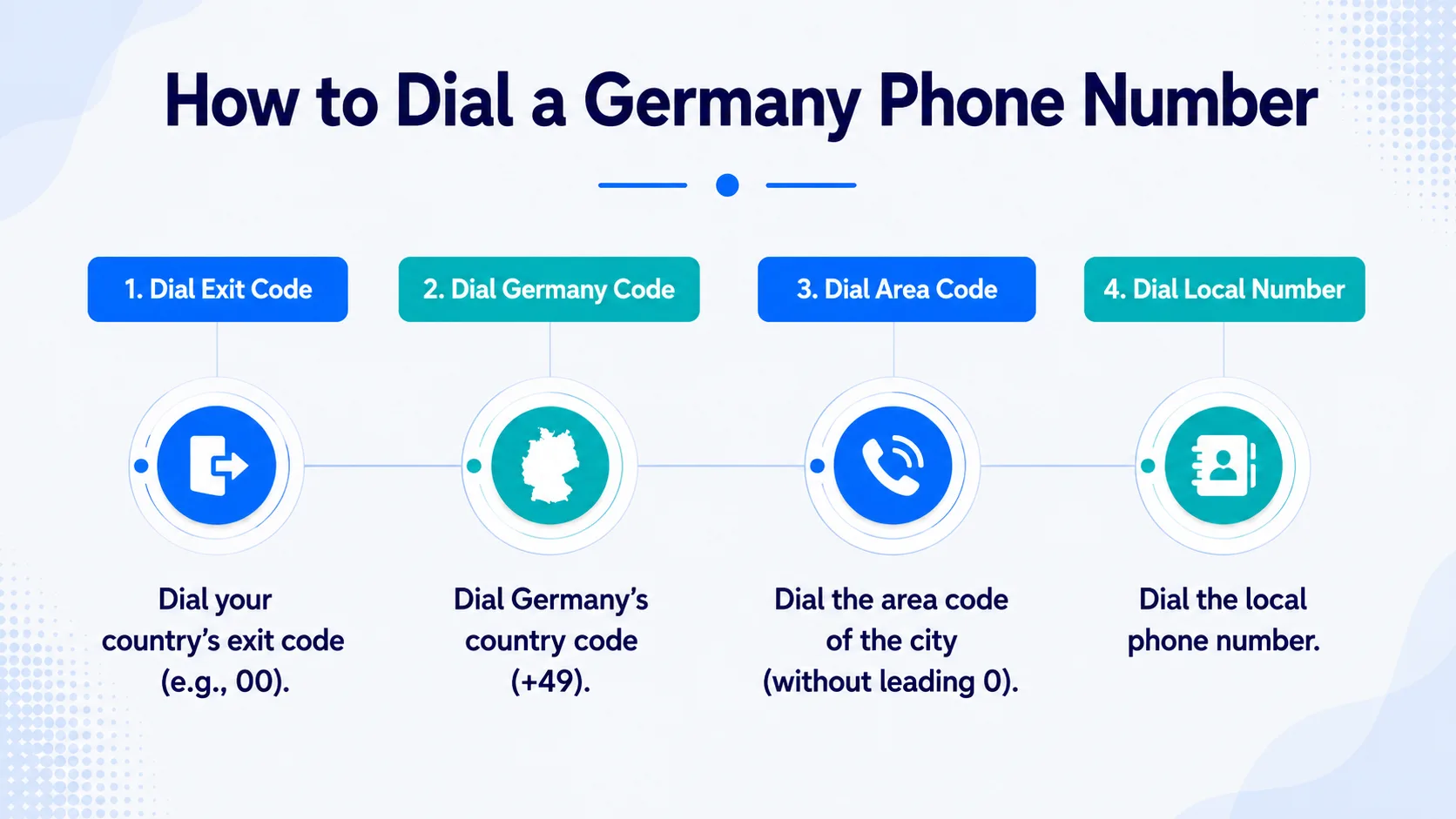
Dialing a Germany phone number from abroad takes four simple steps, whichever country you start from.
- Dial your exit code — 011 from the US or Canada, 00 from the UK and most of Europe
- Dial 49, Germany's country code
- Drop the leading 0 from the area code or mobile prefix
- Dial the area code (or mobile prefix) followed by the subscriber number
For example, reaching a Berlin landline from the US means dialing 011 49 30 12345678. On a smartphone, you can replace the exit code with a plus sign and dial +49 30 12345678 directly.
For more on international dialing patterns, our guide to country codes breaks down the same steps for other destinations. Once you dial one German number correctly, every other one follows the exact same pattern, so the format quickly becomes second nature.
Calling or texting Germany regularly?
Skip roaming charges with a virtual German number you can use for calls and texts from anywhere in the world.
How to Get a Virtual Phone Number from CallMama
CallMama lets you get a virtual German number so you can call and text Germany at local rates instead of paying international carrier fees. It is ideal for staying in touch with family, running a German business line, or avoiding roaming charges while you travel.
Visit the Website or Download the App
Visit callmama.com or download the CallMama app from the App Store or Google Play
Create Your Free Account
Create a free account using your email address
Choose Your Plan
Choose a plan that fits your needs — monthly or pay-as-you-go
Select Your Number
Select your virtual number — pick Germany as the country and your preferred area code
Activate Instantly
Complete payment and activate your number instantly
Configure Your Settings
Configure call forwarding, voicemail, or SMS settings as needed
Start Calling Instantly
Start making and receiving calls right away
Your new number is fully active the moment payment is confirmed. There are no long-term contracts — upgrade, downgrade, or cancel at any time.
A virtual line also gives you a real German presence that customers and contacts recognize. People are far more likely to answer a local number than an unfamiliar international one, which makes a virtual German line useful for both business and staying close to family back home.
Common Mistakes to Avoid
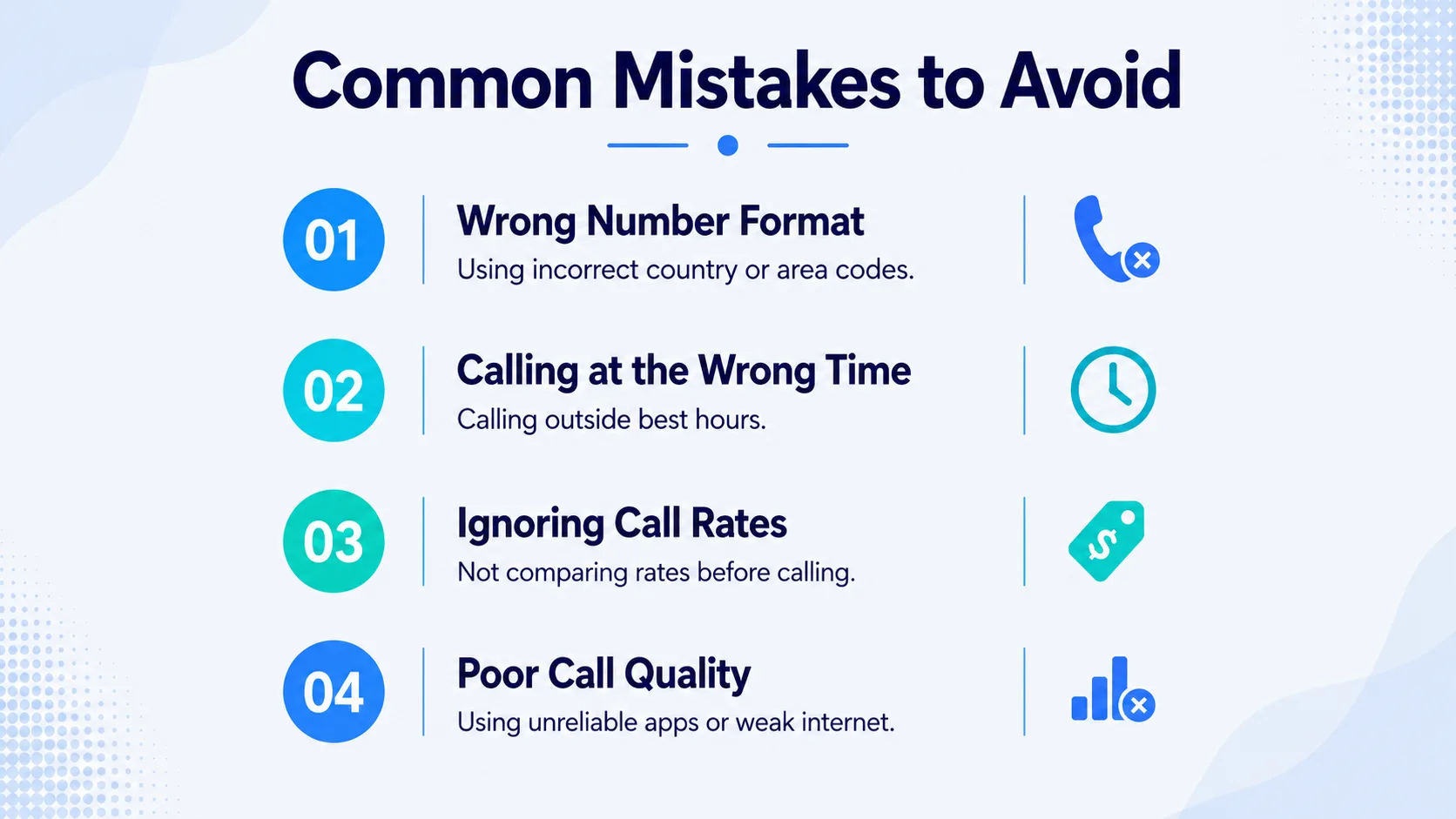
The most frequent error is keeping the leading 0 after the country code. Dialing +49 030 12345678 instead of +49 30 12345678 will fail on most networks.
- Keeping the leading 0: always drop it after adding +49
- Wrong exit code: exit codes differ by country and are not interchangeable
- Mixing up mobile and landline: a 1 after +49 always means mobile
- Guessing area code length: German area codes run 2 to 5 digits, so verify the city
Texts follow the same rules, so a message to +49 030 12345678 will often bounce for the same reason. Double-checking the German phone number format before sending saves a failed attempt.
These same dialing habits apply to other destinations too. If you often reach contacts abroad, keeping a set of virtual numbers for the countries you call most removes the guesswork around exit codes and leading zeros entirely.
Best Times to Call Germany
Germany runs on Central European Time (CET), which is UTC+1 in winter and UTC+2 during summer daylight saving. The entire country shares one time zone, so there is no regional guesswork.
- 9:00 AM CET = 3:00 AM EST (US East Coast winter hours)
- 9:00 AM CET = 12:00 AM PST (US West Coast winter hours)
- 9:00 AM CET = 8:00 AM GMT (UK winter hours)
- 9:00 AM CEST = 8:00 AM BST (UK summer hours)
According to the Bundesnetzagentur numbering plan, the shared time zone and consistent structure make scheduling calls far simpler than in countries spanning several zones.
For business calls, aim for mid-morning to early afternoon German time to catch offices during working hours. Personal calls have more flexibility, but avoiding very early mornings and late nights keeps things courteous no matter where you are dialing from.
Conclusion
Reading a Germany phone number comes down to three parts: the +49 country code, the area code or mobile prefix, and the subscriber number. Once you know that a 1 after +49 means mobile and that the leading 0 disappears for international calls, the format stops feeling cryptic.
Whether you are calling a Berlin office or texting a friend in Munich, getting the structure right saves time and avoids failed connections. This guide gives you everything needed to format any German number on the first try.
As you make more calls to Germany, standard international rates can climb quickly, especially on longer conversations. A virtual number sidesteps that cost entirely, letting you call and text like a local without tracking exit codes or roaming fees. Take the next step and set up a number built for exactly this kind of calling. Start today and make your next call to Germany the easiest one yet.
Ready to call Germany like a local?
Claim your virtual German number today — instant activation, local rates, and no surprise roaming charges.