Introduction
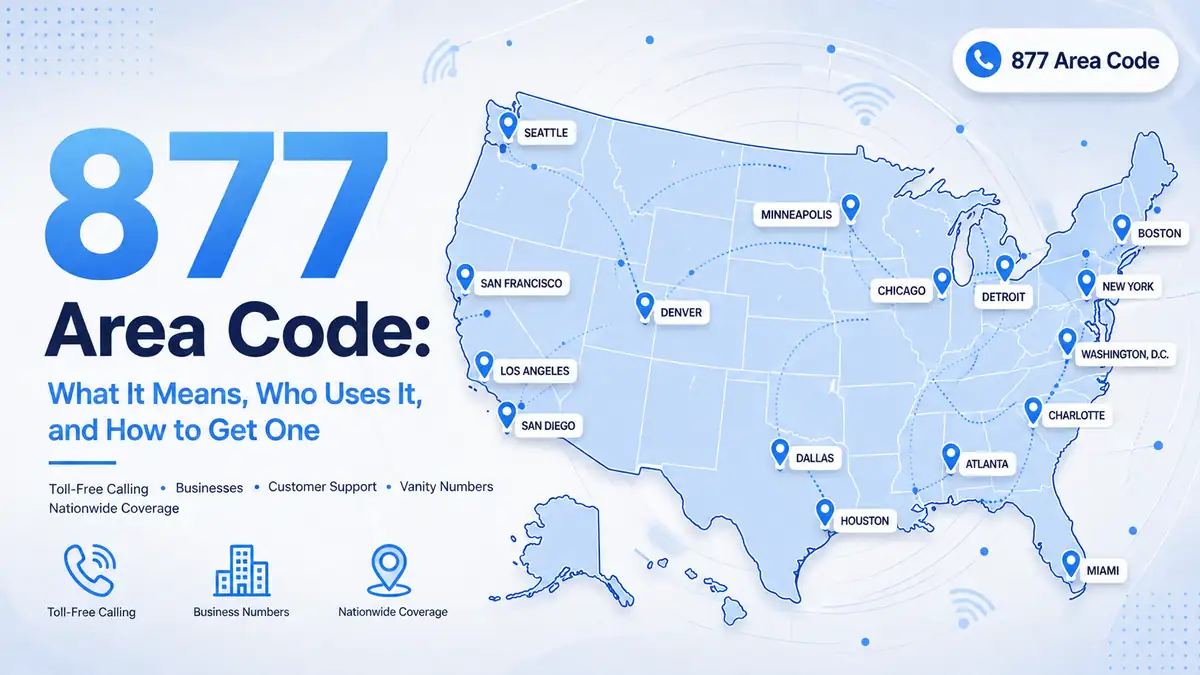
A call lights up your screen with an 877 area code and you hesitate — is it your bank, a delivery update, or someone you should avoid? This guide answers that question completely, because the 877 area code sits behind millions of customer service desks, billing departments, and support hotlines across North America.
You will learn what the prefix really is, who uses it, how its no-cost calling model works, and how to tell a genuine caller from a fraud. Stay with it to the end and you will also see how to put one of these trusted numbers to work for your own business.
Key Takeaways
- The 877 area code is a toll-free prefix — callers across the US and Canada pay nothing, and the number's owner covers the cost.
- It launched on April 4, 1998, the third toll-free code released after 800 and 888.
- The 877 code has no geographic home — a line can belong to a business anywhere in North America.
- Scammers impersonate support desks from this prefix, so independent verification of unexpected calls is essential.
Is 877 a Real Area Code? Here's What It Actually Is
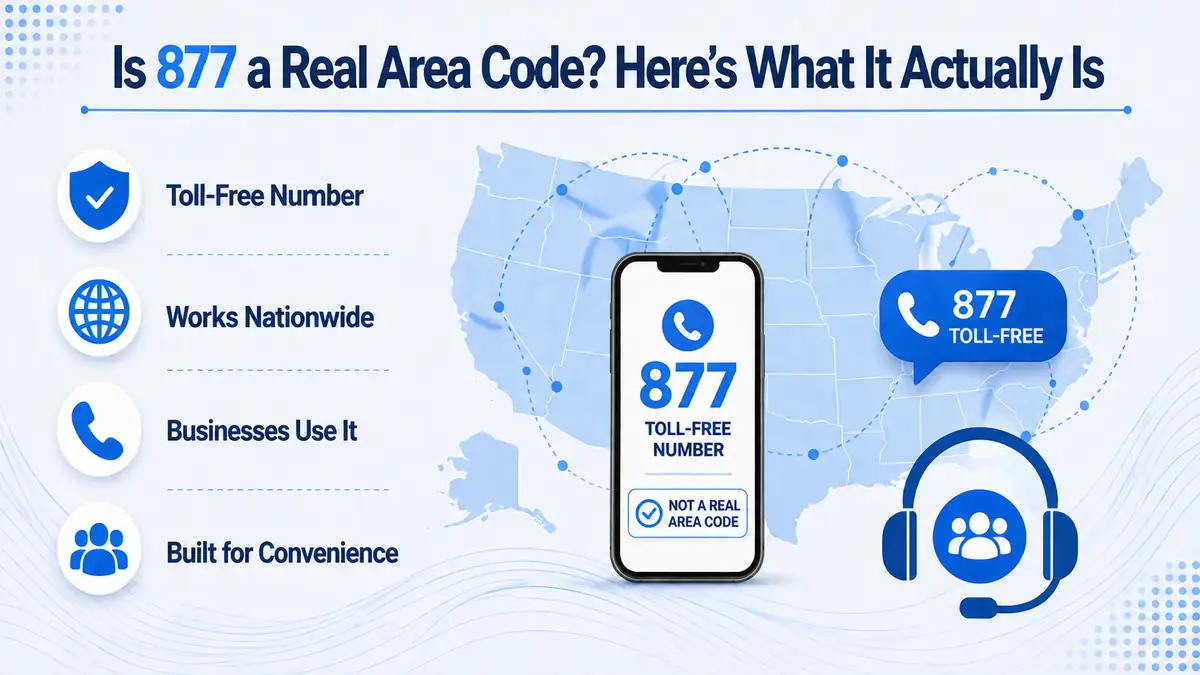
Yes — the 877 area code is entirely real, but it works differently from the codes tied to cities and states. Instead of marking where a phone lives, it marks how the call is billed. Dial any 877 toll-free number from a US or Canadian phone and the call is free for you; the organization that owns the line pays the inbound charges through its carrier.
The FCC designates seven prefixes for this reverse-billing model: 800, 833, 844, 855, 866, 877, and 888. All of them behave identically for callers. What varies is age, availability, and the reputation each pool has built. The 877 code belongs to the older generation, which is why it appears on so many long-established customer service lines.
Because the prefix carries no location, an 877 phone number gives away nothing about where a company operates. A credit union in Ohio, a software firm in Vancouver, and a national retailer can all answer on the same prefix — and all present the same professional, nationwide face.
Who Calls from an 877 Number — and Why
Organizations choose the 877 area code when they want customers to reach them without hesitation. The heaviest users include:
- Banks and card issuers — fraud alerts, account services, and collections teams routinely dial out from toll-free lines.
- Insurance and healthcare companies — claims departments and patient billing use memorable toll-free contact points printed on every statement.
- Airlines, hotels, and travel brands — reservation changes and loyalty desks run on high-volume toll-free routing.
- Utilities and telecom providers — outage lines and account support answer on toll-free prefixes so customers never pay to report a problem.
- Government agencies and nonprofits — helplines and information services choose free-to-call lines for maximum accessibility.
The same logic that drives these industries applies to small businesses. A toll-free line removes the caller's cost objection and signals an established operation — the identical reason companies adopt the 844 area code and its newer siblings.
Behind the Dial: The Journey of an 877 Call
When you dial an 877 toll-free number, your carrier checks a central registry administered by Somos, Inc. — the FCC-appointed manager of all North American toll-free assignments. The registry returns routing instructions set by the number's owner, and the call forwards instantly to whatever destination they chose: an office line, a mobile phone, a VoIP app, or a cloud contact center.
That routing layer is what makes toll-free lines so flexible. The published number never changes, while the destination behind it can move from a desk phone to a home office to an overseas support team without customers noticing. Modern virtual providers expose these controls in an app, so even a one-person business can run enterprise-grade call flows on an 877 toll-free number.
1998 and the Toll-Free Boom: Where 877 Came From
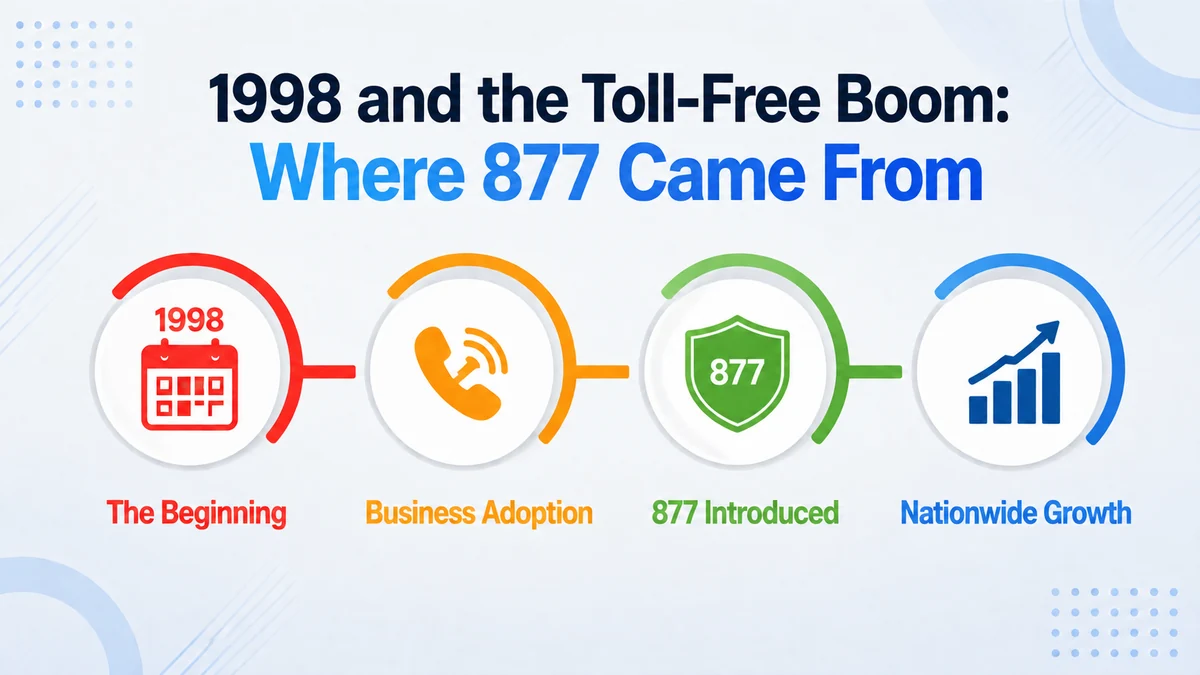
Toll-free calling began in 1966, when AT&T introduced the 800 prefix to replace operator-assisted collect calls. For thirty years, 800 stood alone. Then the internet era's explosion of customer service lines drained the pool: 888 arrived in March 1996, and just two years later the 877 area code opened on April 4, 1998 — the third member of the toll-free family.
| Prefix | Introduced | Availability Today |
|---|---|---|
| 800 | 1966 | Nearly exhausted — premium resale prices |
| 888 | March 1996 | Very limited |
| 877 | April 1998 | Limited — established reputation |
| 866 | July 2000 | Limited |
| 855 | October 2010 | Good inventory |
| 844 | December 2013 | Good inventory |
| 833 | June 2017 | Best availability |
More than 25 years of continuous service gives the 877 code something newer prefixes cannot buy: recognition. Generations of customers have dialed it for banking, travel, and tech support, so it reads as familiar rather than suspicious.
877 or 800, 888, 866? Choosing a Toll-Free Prefix
Every toll-free prefix works the same way for callers, so choosing between them comes down to three practical factors:
- Price and availability. Original 800 numbers trade at premium prices because the pool is nearly empty. The 877 pool is tighter than newer codes but far more affordable than 800.
- Recognition. Older prefixes carry decades of consumer trust. An 877 phone number benefits from that familiarity, while the newest codes are still building it.
- Vanity potential. If you want a specific word or pattern in your digits, newer pools like 833 offer more open combinations, as covered in our 855 area code guide.
The practical answer for most businesses: pick the prefix with the number you actually want. A memorable line matters more than two digits of history — though when a genuine 877 area code option is available, its age works quietly in your favor.
Established Toll-Free Credibility, Minutes to Set Up
Browse live toll-free inventory — including 877 lines — and give every customer a free way to reach you.
What an 877 Line Says About Your Business
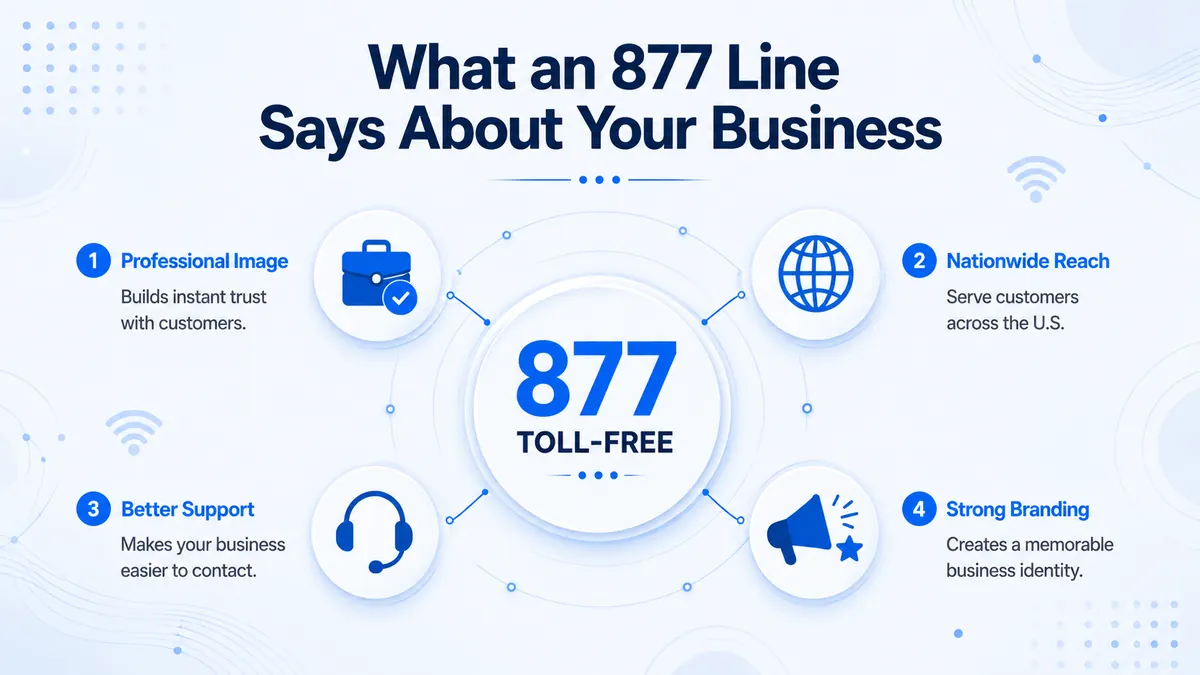
Caller psychology is simple: local prefixes say "neighborhood," toll-free prefixes say "institution." Publishing an 877 phone number on your website and invoices tells customers three things at once — calling you costs them nothing, you operate beyond one city, and you take support seriously enough to pay for it.
There are measurable benefits behind the image. A toll-free line lifts response rates on national advertising, keeps your 877 toll-free number stable through office moves, and works with the FCC guidelines that lets you port the number between providers whenever you choose. The number is a business asset you own and keep.
How to Get a Virtual Phone Number from CallMama
CallMama offers virtual toll-free and local numbers through a simple app, with flexible monthly and pay-as-you-go plans. Everything runs in the cloud — no desk phones, no installation visits, and your line is live the same day you choose it.
Visit the Website or Download the App
Get the app from the App Store or Google Play, or sign up in your browser.
Create Your Free Account
Register with your email address — it takes under a minute.
Choose Your Plan
Pick monthly or pay-as-you-go pricing that matches your call volume.
Select Your Toll-Free Number
Browse available inventory and choose an 877 area code line or another toll-free prefix that fits.
Activate Instantly
Complete payment and your number goes live immediately.
Configure Your Call Flow
Set up call forwarding, voicemail, and SMS so calls reach the right person.
Start Answering
Take calls and texts on your new toll-free line from any device, anywhere.
Fake Support Desks and 877 Robocalls: Staying Safe
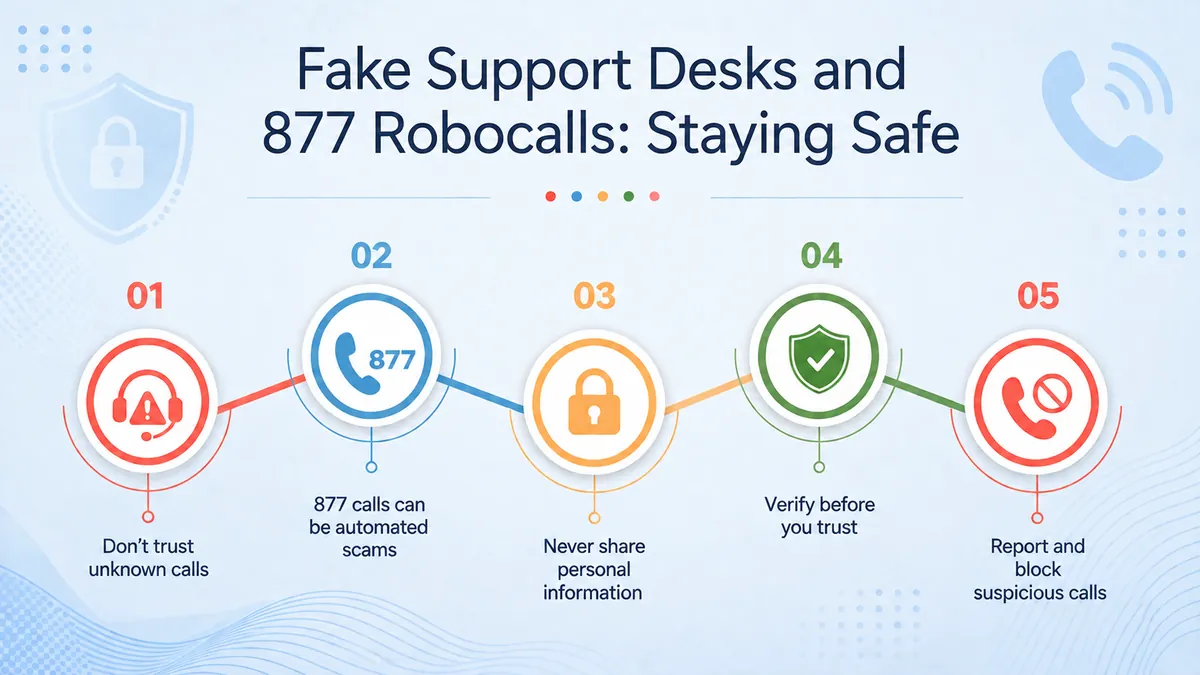
The same trust that makes the 877 area code valuable to businesses makes it attractive to fraudsters. Because consumers associate the prefix with banks and official support desks, scammers spoof the 877 code to add instant credibility to their calls.
Schemes That Use This Prefix
- Fake bank fraud departments — callers claim suspicious activity on your account and ask you to "verify" card numbers or one-time passcodes.
- Tech support impersonation — fraudsters pose as Microsoft, Apple, or antivirus vendors and push remote-access software.
- Debt collection pressure — threats over debts you never owed, demanding immediate payment by gift card or wire.
- Prize and rebate bait — a "free" reward that requires an upfront processing fee.
- Callback traps — a missed-call message urging you to return the call and sit through a costly or data-harvesting pitch.
Your Defense in Four Habits
- Never share passwords, PINs, or one-time codes with an inbound caller — real institutions never ask.
- Hang up and call back on the number printed on your card or statement, not the one that called you.
- Treat urgency and unusual payment methods (gift cards, crypto, wire) as automatic red flags.
- Report fraudulent calls to the FTC at reportfraud.ftc.gov so patterns get tracked.
Conclusion
The 877 area code proves that a number can carry a reputation. Since April 1998 it has connected customers to companies at zero cost to the caller, earning a familiarity that newer prefixes are still working toward.
You now know how its reverse-billing model works, which industries rely on it, and how its registry-based routing sends each call exactly where the owner wants. Just as important, you can spot the impersonation scams that trade on its good name.
Toll-free inventory keeps tightening as more businesses claim their lines, and the older pools tighten fastest. Getting an 877 phone number — or any toll-free line — now takes minutes instead of a telecom contract. Choose your number, switch on forwarding, and give every customer in North America a free way to reach you. The next call your business answers could be the one that grows it.
Put a Trusted Toll-Free Line on Your Website Today
Download CallMama, pick your toll-free number in the app, and answer customer calls before the day is out.