Key Takeaways
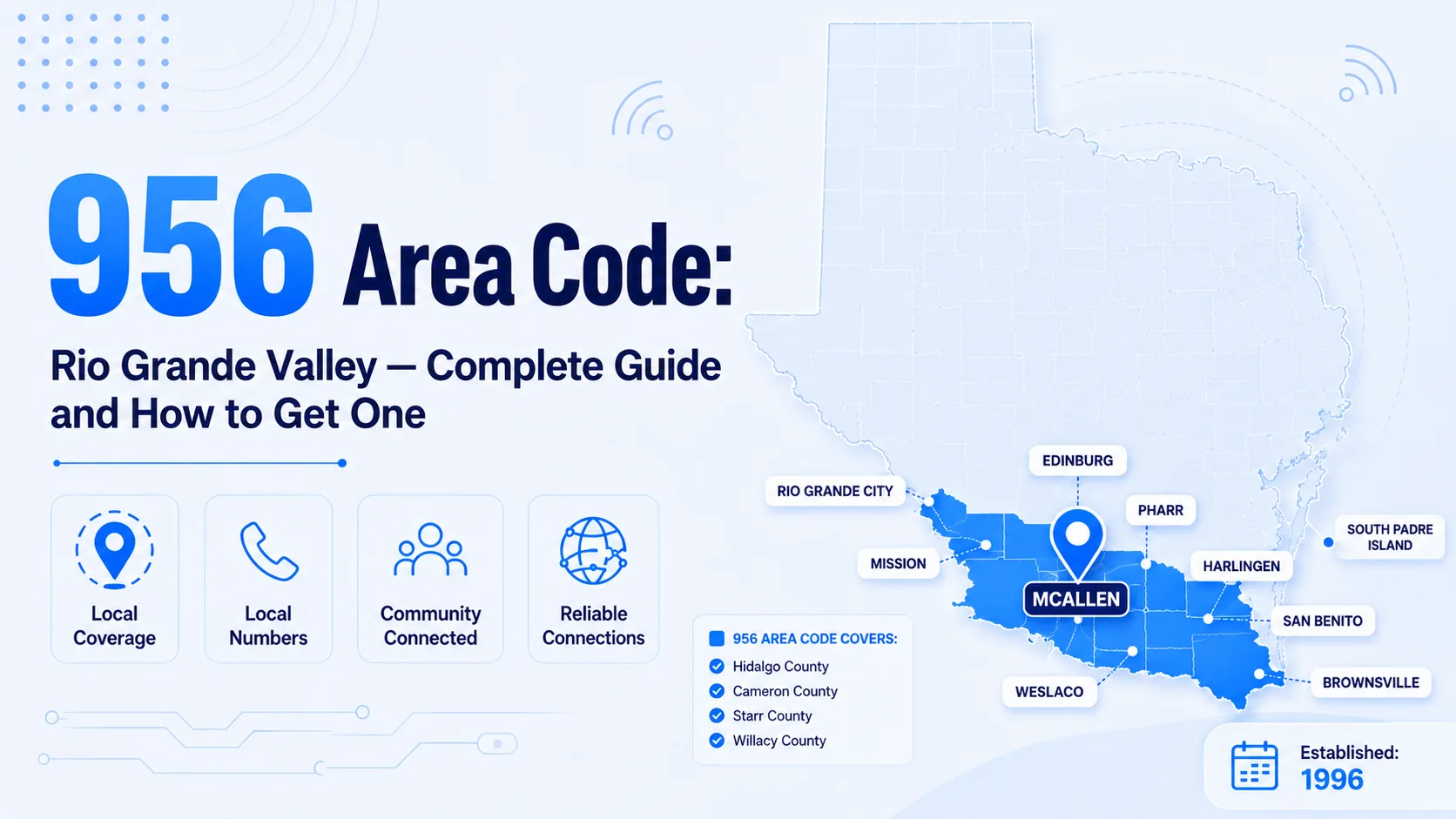
- The 956 area code covers McAllen, Brownsville, Laredo, Harlingen, and the wider Rio Grande Valley.
- It was created in 1997 when the old 210 code split to give South Texas its own identity.
- Unlike many busy area codes, 956 has never needed an overlay despite serving a large population.
- Getting a virtual phone number for this region takes minutes with the right app, no landline required.
The 956 area code is the telephone code that connects callers to McAllen, Brownsville, Laredo, and the entire Rio Grande Valley along the Texas border. If you have ever received a call from this number, it likely came from one of these border cities or a nearby small town. This guide explains where the code is used, how it began, and why it still matters for businesses and residents today, plus exactly how to get your own 956 phone number in minutes. Keep reading to see why this South Texas code is worth understanding before your next call to the region.
What Is the 956 Area Code and Where Is It Located?
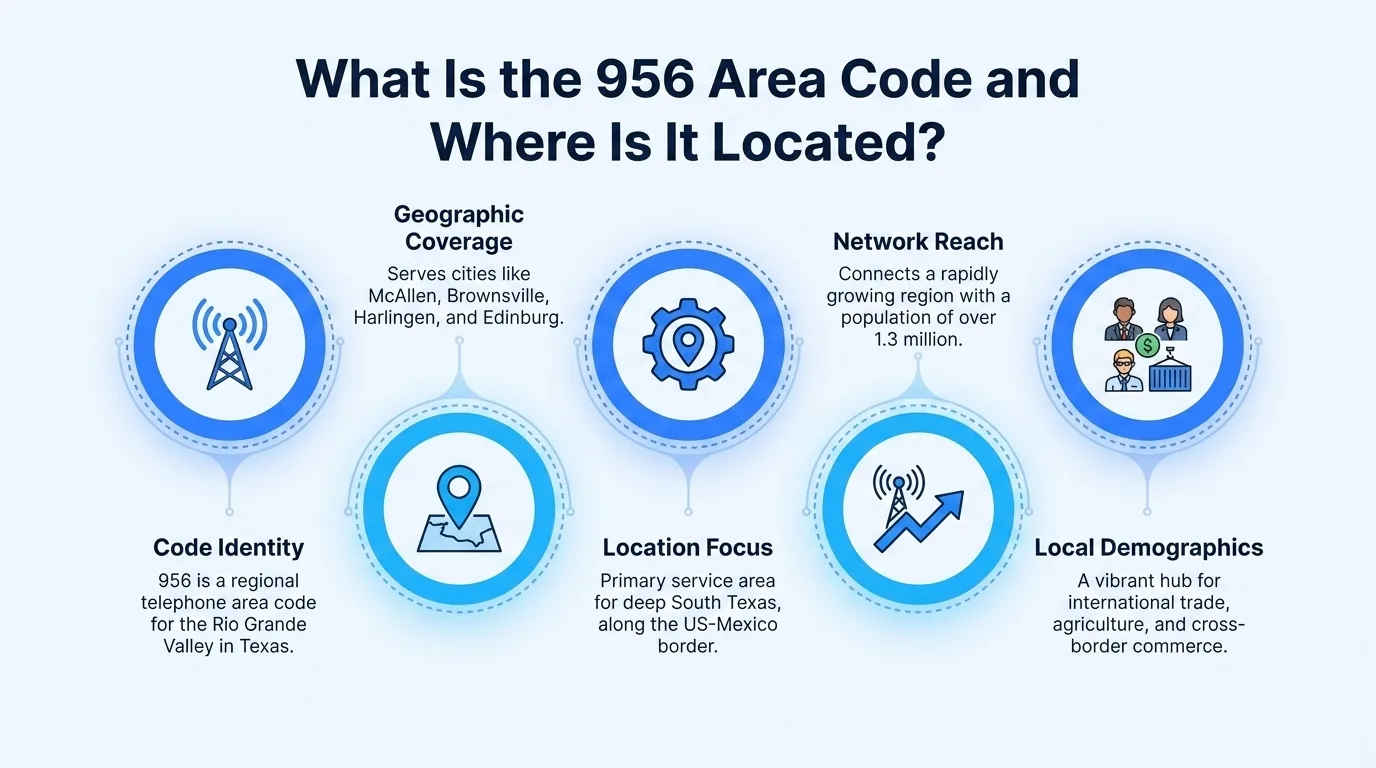
The 956 area code serves the southernmost tip of Texas, running along the Rio Grande from Laredo to Brownsville. It stretches through McAllen and Harlingen in the Rio Grande Valley, covering a stretch of border communities. Anyone dialing an area code 956 number is reaching someone across this bilingual, fast-growing corner of the state. The region sits in the Central Time Zone and observes Daylight Saving Time each year.
Time Zone and Dialing Basics
This region runs on Central Time and shifts an hour ahead each spring for Daylight Saving Time. Callers must dial all ten digits for every local call, even between two McAllen numbers. Forgetting the area code is the most common reason local calls fail to connect on the first try.
Which Cities Does the 956 Area Code Cover?
McAllen anchors the region as a retail and healthcare hub with a fast-growing population near the border. Brownsville and Harlingen sit along the coast, tied closely to trade, shipping, and the aerospace industry. Laredo rounds out the coverage as one of the busiest inland ports in the country for cross-border trade.
- McAllen: The anchor city and a fast-growing retail and healthcare hub near the border.
- Brownsville & Harlingen: Coastal cities tied closely to trade, shipping, and the aerospace industry.
- Laredo: One of the busiest inland ports in the country for cross-border trade, rounding out the coverage.
The History Behind the 956 Area Code
Understanding the past helps explain why the 956 area code looks and works the way it does today. South Texas once shared the 210 code with San Antonio and the entire surrounding region. That single code eventually needed to split as both areas kept growing.
From a Shared San Antonio Code to Its Own Region
When 210 first launched, it covered San Antonio along with every border town from Laredo to Brownsville. As San Antonio kept adding new numbers, regulators split the border counties into their own code in 1997. This left San Antonio with 210 and gave the Rio Grande Valley its own identity.
Why 956 Has Never Needed an Overlay
Many area codes eventually add an overlay once they run low on number combinations, but 956 has stretched its supply carefully. Regulators reclaimed unused blocks and shifted to smaller number allocations, stretching the pool further than expected. This has left enough room for new numbers even though ten-digit dialing applies nationwide.
Getting a 956 Phone Number: Virtual Phone vs. Traditional Landline
Once you decide you need a number in this region, you can choose between an old-fashioned landline and a modern virtual line. For most people today, a virtual number is the more practical option.
Flexibility and Setup Time
- Traditional Landline: Ties your number to a wall jack at one address, and installation can take days.
- Virtual Number: Activates in minutes and works through an app on your phone, tablet, or computer from anywhere in the world.
Cost and Features
- Traditional Landline: Often carries equipment fees, installation charges, and rigid contracts.
- Virtual Number: Skips the hardware and bundles in features like voicemail transcription, call forwarding, and texting for one predictable price.
Why a Local 956 Area Code Number Matters for Your Business
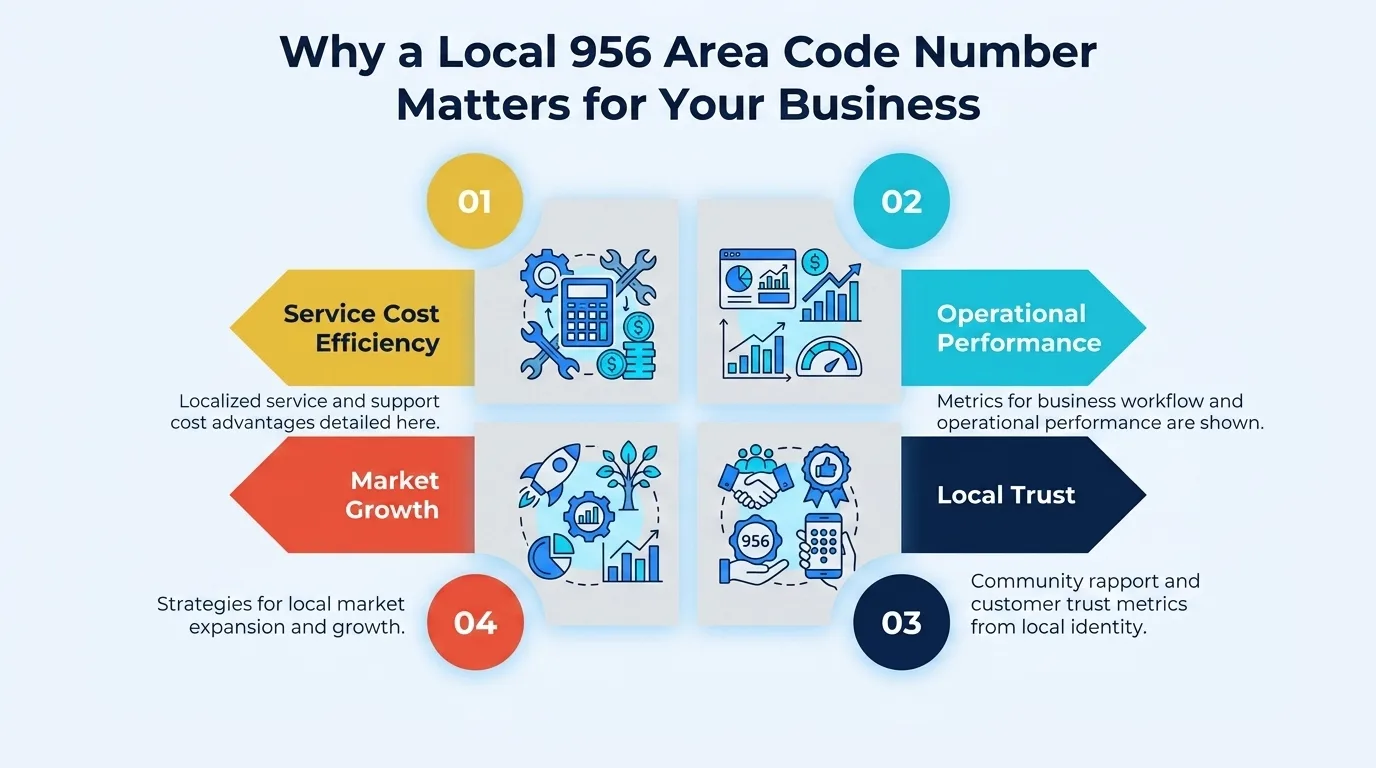
A phone number is often a customer's first impression of your business, and a local number sends a clear signal. Choosing this area code tells Rio Grande Valley customers that you are part of their community, not an outside call center.
Building Instant Trust
People are more likely to answer and trust calls from numbers that match their own area code. A business using a 956 area code number for its McAllen office looks established and easy to reach, which shortens the path from first contact to sale.
Stronger Local Marketing
Ads, flyers, and radio spots with a local number perform better than ones showing an unfamiliar toll-free line. A recognizable local number on your marketing makes your call to action feel more relevant to Rio Grande Valley shoppers.
McAllen's Trade and Healthcare Economy and the 956 Area Code
McAllen anchors a booming retail and healthcare corridor, drawing shoppers and patients from both sides of the border. The demand for local numbers has grown right along with new hospitals, clinics, and shopping centers opening across the valley. Laredo adds another layer, moving more cross-border freight by truck than almost any other port in the nation. Brownsville ties the region together with a growing aerospace and shipping sector near the Gulf coast. Businesses in any of these sectors gain an edge by pairing a local Texas number with their national operations, much like companies expanding coast to coast often pair a local line with a toll-free option such as the 833 area code for wider reach.
Ready to sound like a true Rio Grande Valley local?
Getting a number that matches your customers' area code has never been easier — no contracts, no hardware, no SIM.
How to Get a Virtual Phone Number from CallMama
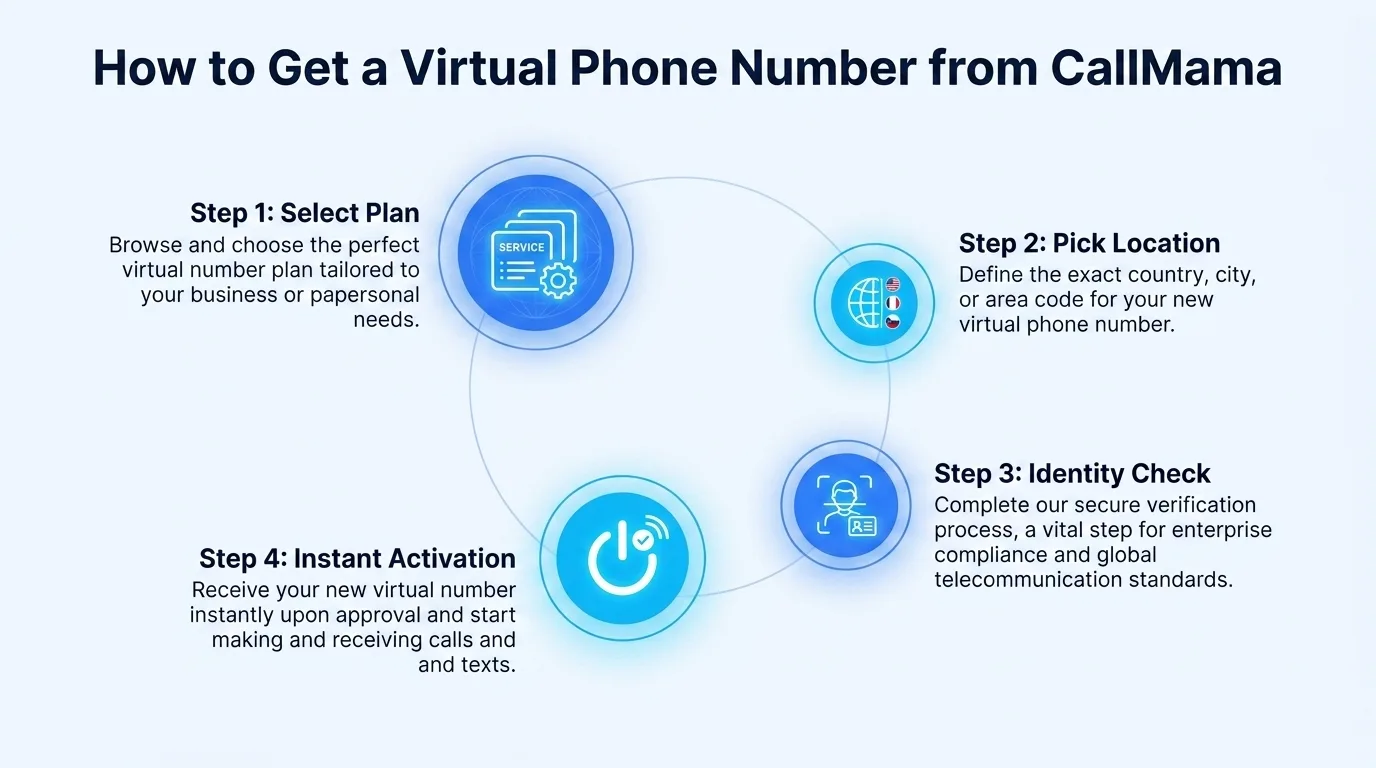
CallMama makes it simple to claim a local number for McAllen or almost any city in the world, without buying hardware or signing a long contract. The app stands out because you can pick your exact area code, activate the line instantly, and manage calls and texts from one place. It is built for entrepreneurs, remote teams, and anyone who wants a professional presence without the wait.
A Simple, Step-by-Step Guide:
Visit the Website or Download the App
Visit callmama.com or download the app from the App Store or Google Play.
Create a Free Account
Sign up using your email address in just a few taps.
Choose a Plan
Pick a plan that fits your needs, whether monthly or pay-as-you-go.
Select Your Virtual Number
Select your virtual number by picking the 956 area code or any other region you need.
Activate Your Number
Complete payment and activate your new number instantly.
Configure Your Settings
Set up call forwarding, voicemail, and SMS settings to match how you work.
Start Calling Right Away
Start making and receiving calls immediately, from anywhere with an internet connection.
Unlock More With Your 956 Area Code Number
A virtual line does more than ring your phone; it becomes a small toolkit for staying organized. Once your local number is active, a few features make the biggest difference day to day.
For Companies Outside Texas
A remote company can test the McAllen market with a local number before ever opening an office. This keeps costs low while still giving customers a familiar local contact, similar to how businesses expanding into the 904 area code test new coastal markets before committing further.
For Local Entrepreneurs
Freelancers and small business owners can keep work calls separate from personal ones without buying a second phone. Custom voicemail greetings and business hours make a one-person operation sound like an established company.
Will the 956 Area Code Ever Get an Overlay?
Some residents wonder if 956 will eventually need a second code like so many busier regions have. For now, regulators say the numbering pool here remains healthy thanks to careful number management.
Why Ten-Digit Dialing Still Applies
Even without an overlay, NANPA guidelines require ten-digit dialing everywhere in the country. This keeps the system consistent, so callers never have to guess whether a neighboring region shares a code with their own.
What Would Change If an Overlay Arrives
If growth ever does trigger an overlay here, existing 956 numbers would stay exactly the same. New numbers would simply come from a fresh code sharing the same region, just as it works in busier parts of the country today.
Conclusion
The 956 area code remains one of Texas's most distinctive codes, tying together McAllen, Brownsville, Laredo, and the wider Rio Grande Valley border region. From its 1997 split off the old 210 code to its unusual status as a large region that has never needed an overlay, this area's numbering history reflects careful planning. Businesses and residents alike benefit from understanding how the code works, from ten-digit dialing rules to the trust a local number builds with customers. Armed with this knowledge, choosing or keeping a matching number becomes a simple, informed decision.
Getting your own number no longer means waiting for a technician or signing a long contract with a phone company. A virtual 956 phone number activates in minutes and travels with you anywhere in the world. Whether you are opening a business, relocating, or simply want a local presence in South Texas, the next step is just a few taps away. Download the app, pick your number, and start connecting with the McAllen community today.
Still using an out-of-town number for Rio Grande Valley contacts?
Switch to a local presence that customers instantly recognize and trust — download the app or grab your number today.
